
Product Description
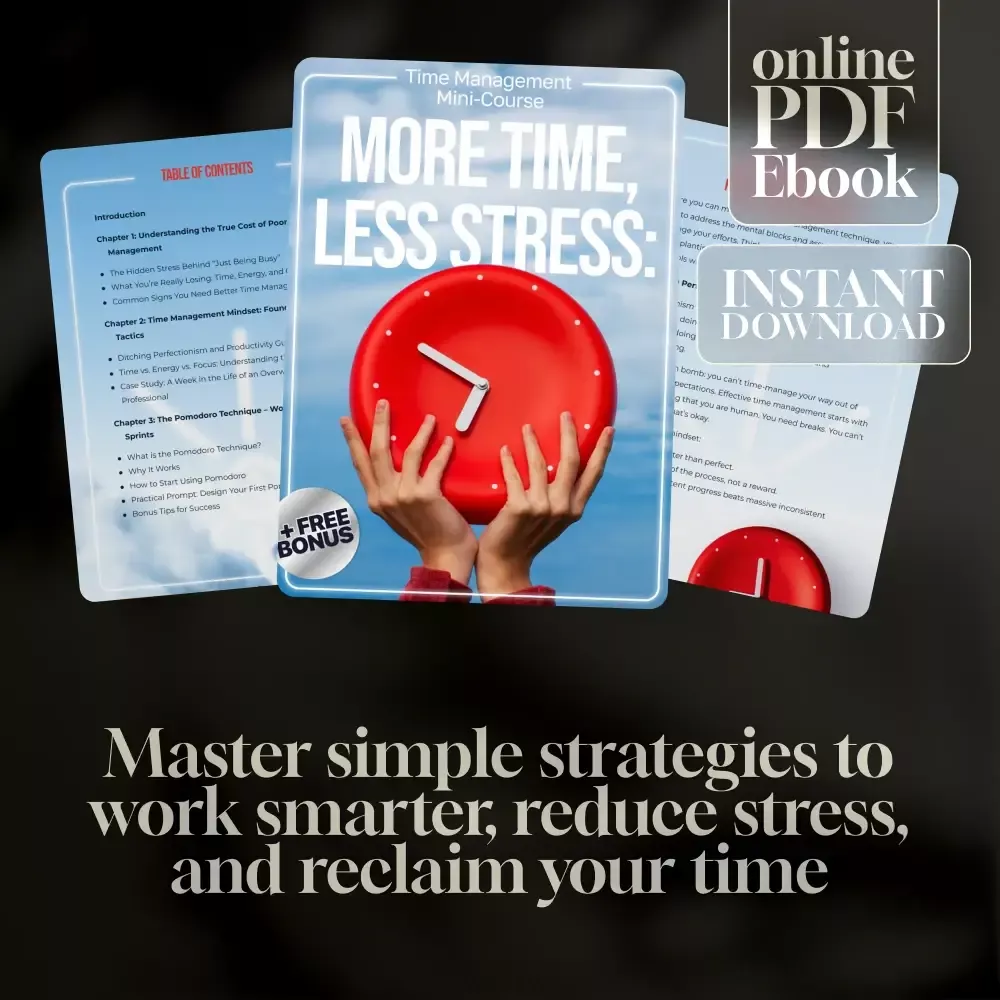
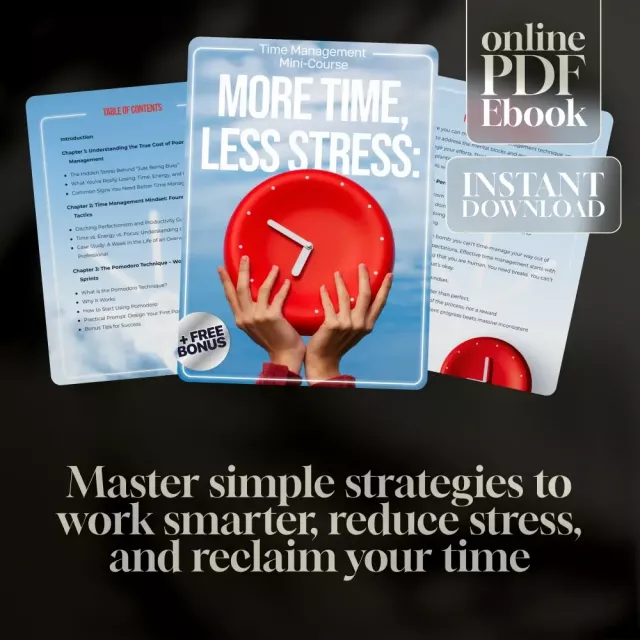
Feeling like your to-do list never ends and your day runs you instead of the other way around? The More Time, Less Stress: Time Management Mini-Course is your shortcut to reclaiming your time, reducing overwhelm, and getting more done without burning out. This easy-to-follow productivity ebook blends practical time management tools with mindset shifts that help you work smarter, not harder. Whether you’re juggling work deadlines, family responsibilities, or personal projects, you’ll learn how to create a plan that fits your life—not the other way around.
What’s Inside
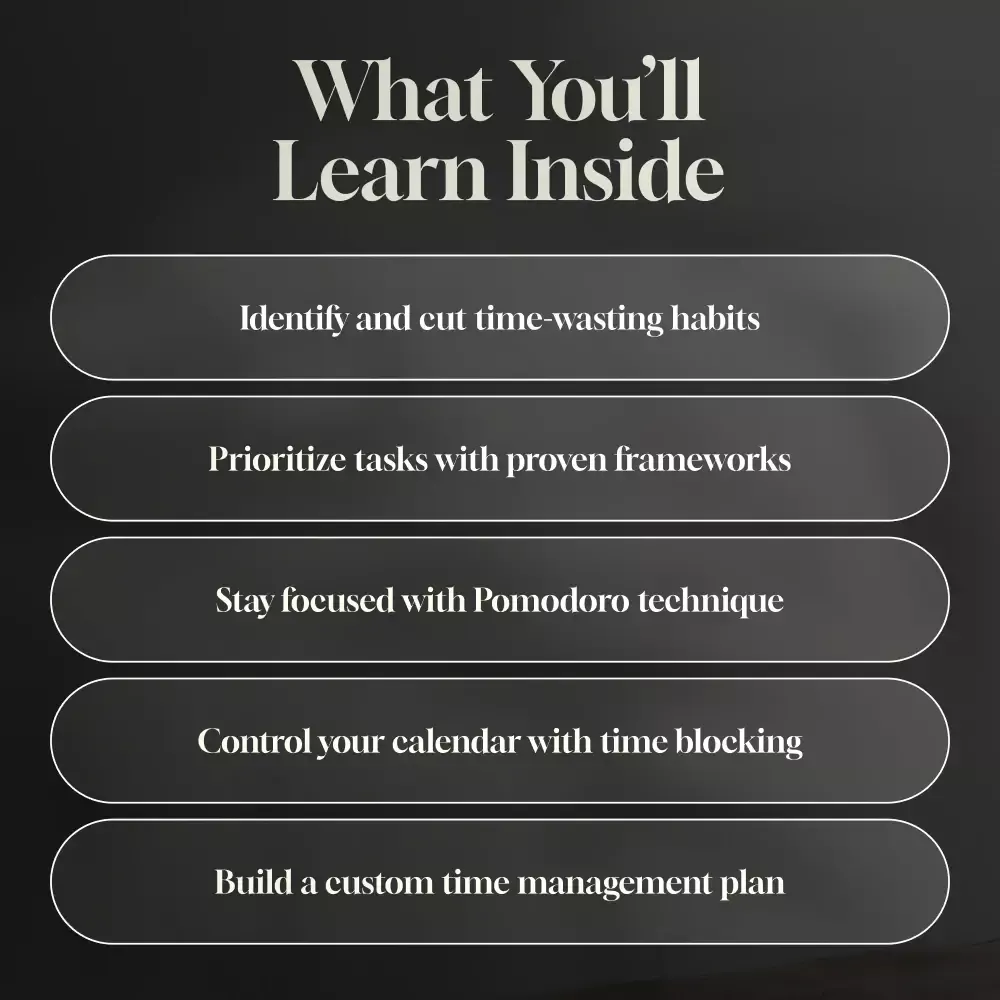
- Understanding the True Cost of Poor Time Management: Spot the hidden ways wasted time drains your energy
- Mindset Before Tactics: Overcome perfectionism and focus on what truly matters
- Pomodoro Technique: Master focused work sprints for better concentration
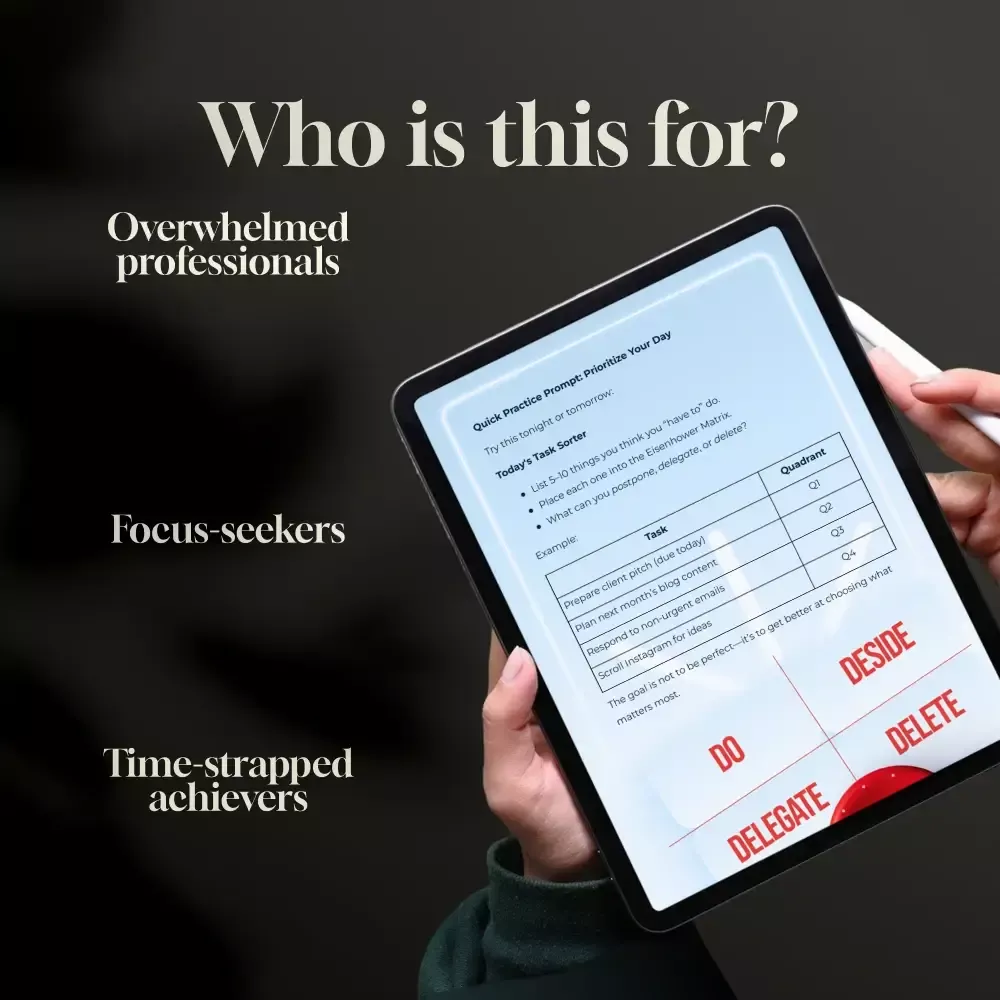
- Eisenhower Matrix: Prioritize tasks with confidence and clarity
- Time Blocking: Own your calendar and protect your focus
- Distraction Management: Reduce interruptions and keep your mind on track
- Personalized Time Plan: Build a routine you can actually stick to
Practical Benefits
- Get more done in less time
- Reduce daily stress and overwhelm
- Prioritize tasks like a productivity pro
- Create a schedule that works for you
- Stay focused and distraction-free
Why This Ebook is Different
Unlike generic productivity books, the More Time, Less Stress: Time Management Mini-Course gives you step-by-step guidance, real-life case studies, and quick prompts you can use immediately. It’s built for busy people who need practical solutions—not theory—so you can start applying changes the same day you download it.
Take Action
Stop letting time slip away. Download the More Time, Less Stress: Time Management Mini-Course today and start building a more productive, less stressful life—one focused block of time at a time.
Order cancellation
All orders can be cancelled until they are shipped. If your order has been paid and you need to make a change or cancel an order, you must contact us within 12 hours. Once the packaging and shipping process has started, it can no longer be cancelled.
Refunds
Your satisfaction is our #1 priority. Therefore, you can request a refund or reshipment for ordered products if:
- If you did not receive the product within the guaranteed time( 45 days not including 2-5 day processing) you can request a refund or a reshipment.
- If you received the wrong item you can request a refund or a reshipment.
- If you do not want the product you’ve received you may request a refund but you must return the item at your expense and the item must be unused.
We do not issue the refund if:
- Your order did not arrive due to factors within your control (i.e. providing the wrong shipping address)
- Your order did not arrive due to exceptional circumstances outside the control of simpledevices.shop (i.e. not cleared by customs, delayed by a natural disaster).
- Other exceptional circumstances outside the control of https://simpledevices.shop
*You can submit refund requests within 15 days after the guaranteed period for delivery (45 days) has expired. You can do it by sending a message on Contact Us page
If you are approved for a refund, then your refund will be processed, and a credit will automatically be applied to your credit card or original method of payment, within 14 days.
Exchanges
If for any reason you would like to exchange your product, perhaps for a different size in clothing. You must contact us first and we will guide you through the steps.
Please do not send your purchase back to us unless we authorise you to do so.
Instant download
Your purchase will be available to download once payment is confirmed.
Instant download items don’t accept returns, exchanges or cancellations. Please contact us if you have any problems



what i liked most was how simple everything felt. i didn’t feel pressured to change my life overnight, just encouraged to take small steps. the pomodoro idea was the easiest to start with, and i was surprised at how effective it was. i added the time blocking later, and it gave me a sense of balance i hadn’t felt in years. i’m not just finishing tasks faster, i’m actually enjoying my work more. this feels like something i can keep up with, not just a quick fix.💡
This book puts it out there plain and simple - decision-making doesn't have to be as complicated as we make it out to be. With the help of this strategy from good ol' President Eisenhower himself, sorting through tasks and figuring out what deserves my attention has become a walk in the park. Before diving into this ebook, I used to dread decision-making moments. They felt like climbing Mount Everest without any training or equipment – daunting and downright scary! But now? Pfft! It’s more like taking a leisurely stroll down my favorite park on a sunny day. The beauty is in its simplicity. The Eisenhower Matrix lays everything bare for you to see which tasks are urgent and important versus those that can wait or need delegating. And guess what? This ain’t some cookie-cutter approach either; it’s customizable based on your own unique needs. Now when I sit down with my long list of things-to-do staring back at me, instead of feeling overwhelmed by panic mode hitting hard, I feel calm and collected because I've got an effective tool up my sleeve. So yeah folks if you're struggling with decision-making then give this ebook read a shot. Not only will your brain thank you but so will your productivity levels too! And hey don't sweat it if you're not much into strategies or matrices because trust me neither was I before getting into this one right here! So go ahead take the plunge who knows maybe soon enough even you'll start sounding like some high-profile CEO strategizing their way through business deals with ease thanks to our buddy Eisenhower's matrix!
applying these techniques gave me breathing room for hobbies.🧩
The mini-course is brilliant, it’s given me a new perspective on managing tasks and time effectively.
valuable
I’ve tried so many apps, books, and systems for productivity, but this one finally clicked for me. The way the methods are explained makes them approachable. I started with pomodoro sessions, and it instantly made tasks feel less overwhelming. Then I experimented with blocking time for specific activities, and it completely shifted my flow. I noticed I wasn’t just getting more done but also feeling less anxious about unfinished work. The prioritization technique helped me cut out unnecessary tasks that used to drain my energy. It’s not about working harder—it’s about working smarter, and this reminded me of that
✍️
The pomodoro method alone makes this worth every penny. My focus has improved dramatically!
flexible
I was skeptical at first but this ebook truly delivers on its promise of more time less stress. Time blocking strategies have been particularly useful in organizing my day better!
time always slipped away from me, and i constantly felt behind. this resource gave me a structure that felt flexible, not rigid. the pomodoro method helped me break big projects into smaller, more manageable steps, which stopped me from procrastinating. i also started using the eisenhower strategy for my daily to-do list, and suddenly i realized i was wasting hours on tasks that didn’t matter. time blocking turned out to be the biggest win for me—it gave me a sense of order without stress. now, instead of juggling everything at once, i move through the day with focus and calm
This mini-course is an absolute gem for anyone struggling with time management issues. The Eisenhower matrix concept alone was worth it for me.
Feeling so much more productive after going through this ebook! Love the mix of techniques like Pomodoro and Time Blocking, they've made a huge difference in managing my workflow.
focus feels sharper now, my days are actually productive.
Just wrapped up reading this little treasure and boy, am I impressed! The Pomodoro technique that it talks about has seriously been a game changer for me. You know how we all struggle with managing our time, right? Well, this book offers the perfect solution to that problem. I mean, who would've thought something as simple as breaking your work into 25-minute chunks could make such a massive difference? It's like finding an oasis in the desert of procrastination. And let me tell you folks, once you start using this method - there's no going back. Your productivity levels will skyrocket and you'll find yourself getting more done than ever before! One thing I particularly loved was how easy it is to implement. No fancy tools or apps required here; just a good ol' timer and some dedication are enough to get started with this technique. Plus the sense of accomplishment after each 'Pomodoro' is nothing short of exhilarating. Now don't get me wrong – it does take some getting used to at first but trust me on this one – stick with it and you'll see results pretty soon! This ain't no magic pill though; consistency is key here my friends. And what do we say about distractions? They're our biggest enemy when trying to focus on work. But guess what? The Pomodoro Technique helps combat those too by providing designated break times so your brain doesn’t feel overwhelmed or overworked. So if you're someone who’s always racing against time (like yours truly) or simply looking for ways to boost your productivity levels then give this book a shot! Trust me when I say - It's worth every minute spent reading it.
This course isn’t just informative; it’s transformative! From understanding how to use the Eisenhower Matrix effectively, to implementing effective time-blocking strategies – I’m now managing my workload like never before!
i finish more tasks before lunch than all day before.
Wow, this mini-course has been a lifesaver! The time blocking strategies have helped me to prioritize my tasks and manage my day effectively. No more stress for me! 😊
i was skeptical at first, but this resource really helped me. it broke down concepts like prioritization and time blocking in ways that were easy to use immediately. i applied them to my freelance work and saw a difference within a week. i’m completing projects faster and actually taking real breaks without guilt. it feels like i’ve regained control over my day. productivity doesn’t feel like pressure anymore—it feels empowering
☕
If you're looking for a way to overhaul how you approach your daily schedule, this ebook is a game-changer. It doesn't just give you information; it offers practical tools that genuinely shift the way you manage your time. After applying the strategies outlined, I've seen a noticeable improvement in both my productivity and overall stress levels. The techniques, from time blocking to the Pomodoro method, have allowed me to focus more efficiently and get more done in less time. What really stands out is how easy the concepts are to integrate into your life, no matter how busy you are. I’m thrilled with the results, and it’s made managing my day-to-day tasks feel much more achievable and less overwhelming.
love how easy the techniques are to apply daily.
I love how practical this course is; no vague theories or complicated jargon - just clear-cut techniques that actually work!
The methods in this ebook were surprisingly easy to adopt. I particularly liked how they explained the reasoning behind each technique. Knowing why it works made me more motivated to actually apply it. The Eisenhower principle showed me I was often busy with tasks that weren’t truly important. Letting go of those freed up so much energy. I’ve been more consistent with my routines since starting this, and it feels like I’m finally building habits that will last. My days are smoother, and I don’t feel so frantic all the time
If you're feeling overwhelmed by your workload, give these methods a try – they’ve really helped me regain control over my schedule.
This isn’t merely an eBook; it’s like having a personal coach guiding you towards better time management habits.
practical
Wow, this mini-course totally transformed how I manage my time. The Pomodoro technique and Eisenhower Matrix strategies were life-changing. No more stress for me! 😄
practical steps made overwhelming schedules feel lighter and achievable.
I've tried other productivity tools before but nothing has worked as well as the techniques in this book. My favourite part was learning about the Eisenhower Matrix - it's made decision-making so much easier!
Well, let me tell you, it's been an absolute revelation! I mean seriously, who knew that time-blocking strategies could be such a game changer? It's like someone flicked a switch and bam! My life has taken a turn for the better. So here's the deal. We all know how easy it is to get swamped with tasks and just drown in them. One minute you're thinking 'I got this,' next thing you know, your day is over and you've barely scratched the surface of your to-do list. And let's not even talk about those pesky distractions that seem to pop up out of nowhere when we least expect them. But then along comes this whole concept of time-blocking strategies and boy oh boy did things start looking up for me after that. You see what these strategies do is they help streamline your schedule by assigning specific blocks of time for different tasks throughout your day or week. Think about it like this: instead of running around like a headless chicken trying to juggle multiple tasks at once (and inevitably dropping some), what if you had clear cut slots dedicated solely for each task? Sounds pretty neat right? And trust me on this one; it really does work wonders! No more feeling overwhelmed by endless chores or getting sidetracked from important projects because now there’s structure in place guiding my every move. The best part? Seeing tangible progress at the end of each day which gives such a sense accomplishment – something I didn’t experience before adopting these techniques into my routine. Honestly folks, if anyone out there feels as though their days are spiralling out control or they're constantly racing against the clock - give these time-blocking strategies a whirl! They’ve truly revolutionized the way I manage my everyday life.
uplifting
I used to feel constantly stressed due to poor time management until I found this ebook. Now, using the Pomodoro technique and Eisenhower matrix, my days are far less stressful!
my favorite thing about this was how flexible it felt. i’ve always hated strict schedules, but the way time blocking was explained here made it feel natural instead of restrictive. i finally found a way to protect my focus without burning out. the pomodoro method helped me tackle the projects i’d been avoiding, and the prioritization tool helped me realize what was actually worth my time. i’ve been ending each day with a sense of satisfaction instead of frustration, and that’s priceless. i wish i’d learned this years ago
Wow, this mini-course is a lifesaver! The Pomodoro technique has transformed my workday - no more burnout and I'm getting so much more done. 🙌
This ebook really helped me manage my time better. The Eisenhower Matrix strategy was especially useful for prioritizing tasks.
finally managing time instead of letting it control me.
I didn’t expect something this short to have such a big effect, but it absolutely did. The mix of strategies gave me options, so I could experiment and see what worked best for me. I liked the section on energy levels, reminding me that productivity isn’t just about time but also about focus. I applied the time-blocking strategy with breaks built in, and it made my whole workday smoother. What impressed me most is that I can adapt these tools for work or personal life, which means I’m actually living more intentionally every day, not just checking off tasks
Never thought I'd see the day when I had extra free time on hand! Thanks to these strategies, that day is here. Totally recommend it!
I really enjoyed how realistic this felt. So many productivity resources expect you to completely overhaul your life, but this made it clear that small changes could have big results. I liked how it encouraged starting with just one method at a time, like pomodoro or time blocking, instead of doing everything at once. That helped me build momentum without feeling overwhelmed. Now I actually look forward to my focused work sessions, and I feel proud of what I accomplish. It’s not just about finishing tasks anymore; it’s about building routines that support my wellbeing as well.
✨
Wow, this mini-course has seriously improved my productivity. The Pomodoro technique is a game-changer and the Eisenhower Matrix helps me prioritize tasks like never before. I'm getting more done in less time!
productive
stress melted away once i organized my days properly.
The Eisenhower Matrix method taught in this book was an eye-opener for me - now I know exactly what needs to be done first! Plus, the whole concept of 'time blocking' has made planning my day so much easier 😄
my life used to feel like an endless cycle of rushing, multitasking, and never quite catching up. i was busy every minute, yet i always felt behind. this mini-course was like a breath of fresh air. the way it explained the eisenhower strategy changed how i view my daily decisions. suddenly, it was clear why i was spinning my wheels—i was treating every task like it had the same weight. shifting my focus to what’s important rather than what’s urgent has been life-changing. the pomodoro approach also made such a difference. those short bursts of focus made me less anxious about starting and kept me consistent. time blocking was the finishing touch. instead of reacting to everything, i now have a plan. my days feel structured but not restrictive. what i love most is the sense of calm it gave me. i get things done, but i also rest guilt-free. that balance is priceless.
This guide is simple yet effective. Love how it breaks down complex concepts like the Eisenhower Matrix into easy-to-understand steps. My productivity levels are through the roof!
Time management can be tough but this course makes it seem effortless! Using these strategies, especially time-blocking, I've managed to get so much more out of each day 🙌
i feel calmer yet more productive, best combo ever.
Eisenhower matrix and pomodoro together have helped streamline my workflow immensely; they're easy ways to quickly identify priorities and stay productive throughout the day 👍
Last but not least: stress reduction? Check ✔️ This guide doesn't just teach time management, it teaches you how to manage your stress levels too. A must-read for anyone feeling overwhelmed!
What I valued the most about this was its clarity. I’ve seen other productivity advice that’s overwhelming or too complicated, but this was simple enough to follow immediately. The Eisenhower strategy for separating tasks really opened my eyes to how much unimportant work I was piling onto myself. Once I cut that out, my schedule freed up and my stress levels dropped. I can’t believe how much lighter my workload feels now, even though I’m actually accomplishing more. This isn’t about perfection; it’s about progress, and that perspective shift has been invaluable
energizing
for years i tried to improve my productivity by adding more tools, more apps, more lists, and it always left me more overwhelmed. this guide was the first thing that felt light and realistic. i appreciated how each method was broken down into something i could try right away without overthinking. starting with pomodoro gave me quick wins, and i loved how manageable it felt. time blocking was a bigger shift for me, but once i committed to it, my days became so much easier to navigate. the eisenhower approach was honestly the most powerful because it made me rethink what’s actually worth my attention. i used to do so many little tasks that looked important but weren’t truly impactful. now, i know how to spot them and let them go. what i value most is how this gave me space to breathe. i’m productive, but i’m also less stressed and more present.
I was skeptical at first, but now I'm convinced - these techniques really work! Using Pomodoro method, I've seen a significant increase in my productivity without feeling overwhelmed or stressed out.
What an insightful read! This ebook taught me how to effectively manage my time using simple yet powerful tools like Eisenhower Matrix and Time Blocking Strategies. Can't believe how much free time I've gained since implementing them!
this really made me rethink my habits. i used to feel like i was busy all day but never accomplished anything. after applying the methods, i realized how much time i was losing to distractions. the tools here helped me cut the noise and focus on priorities. the pomodoro timer especially made work less intimidating. i’d always start with “just one round,” and before i knew it, i had finished big tasks. the sense of progress has boosted my confidence and energy. now, instead of being drained, i finish the day satisfied and even optimistic about tomorrow.
the methods made my chaotic workload surprisingly manageable overnight.
This mini-course is a lifesaver! I've been struggling with time management for years, but the strategies in this ebook have seriously boosted my productivity. The Pomodoro technique has become my go-to 🙌.
I was initially skeptical about another 'productivity hack' book, but boy, was I wrong! This one's different. It doesn't just preach - it gives practical tools like the Eisenhower Matrix that actually work!
Before reading this, I thought time management was about squeezing as much as possible into each day. I would pack my calendar full and then feel like a failure when I couldn’t keep up. This mini-course reframed everything for me. The section on the Eisenhower technique really hit home—I realized I was spending too much time on low-priority things that weren’t moving the needle. Once I began separating urgent from important, my productivity skyrocketed. I also loved how practical the Pomodoro strategy was. I never imagined such short bursts of focus could create such massive results, but it completely changed my workflow. Time blocking tied it all together by giving my day structure without being suffocating. I know exactly when I’m supposed to be doing something, and I no longer feel guilty for resting. The combination of strategies is what makes this so powerful. It’s not about working harder, but about working with clarity and peace of mind
The content of this ebook is so easy to digest and apply – no jargon or complex theories. Just simple, effective strategies to manage your time better 👍.
clarity, balance, focus, and real results all in one.
Wow, this mini-course has been a lifesaver! The Pomodoro technique has helped me focus and get more done in less time. Can't believe how much my productivity has improved! 😄
mindful
This ebook is filled with practical tips and strategies for better time management. I particularly love the Time Blocking method - it's helped me stay on track with my daily tasks.
I wasn’t expecting much, but I was pleasantly surprised by how practical this turned out to be. The pomodoro strategy helped me break through procrastination, and the time blocking made my day flow better. What I really appreciated was the balance between productivity and stress reduction. It’s not about filling every minute but about using time wisely. That mindset shift alone has been transformative for me. I also liked how easy it was to personalize. I didn’t feel pressured to do everything exactly one way. Instead, I built a schedule that actually fits my life and goals.
Totally recommend this course if you're feeling overwhelmed by your workload. The Eisenhower Matrix tool alone makes it worth it - it's really helped me prioritize what needs to be done first.
days feel longer, tasks lighter, and energy finally renewed.
Since reading this ebook, I have seen drastic changes in how efficiently I use my time at work due to their unique approach towards productivity enhancement techniques such as Pomodoro and Eisenhower matrix.
i used to constantly feel like the day was slipping through my fingers. i’d start with good intentions, but by the evening, i felt drained and disappointed in myself because my list of unfinished tasks was always too long. this guide helped me finally see that the problem wasn’t me—it was the way i was organizing my time. the pomodoro approach was such an easy entry point. i didn’t feel intimidated by starting a 25-minute session, and that momentum made me keep going. i noticed i procrastinate less because the chunks feel doable. the eisenhower method was another eye-opener. i realized i was giving way too much energy to tasks that looked urgent but weren’t actually important. just that shift alone made my days feel clearer and lighter. time blocking added even more structure, and i actually enjoy mapping out my day now. what surprised me most is how much calmer i feel. instead of running on stress, i’m working with intention. i even have time in the evenings for rest without guilt, something i haven’t felt in years
Wow! This ebook is a lifesaver. The Pomodoro technique has helped me stay focused and get more done in less time. Highly recommend!
never thought small adjustments could change my entire routine.
The Time Blocking strategies are so practical and easy to implement, it's made a huge difference in my productivity levels! 👍
my schedule was always chaotic until i started implementing the ideas here. i loved how it gave both structure and flexibility, so i didn’t feel trapped. the method for prioritizing tasks helped me stop wasting time on things that didn’t matter. instead of reacting to emergencies all day, i now focus on meaningful progress. my workday feels calmer, and i still get more done. the best part is i don’t end the day feeling drained anymore. i actually have time for myself, and that’s something i never thought possible with such a demanding workload.
After reading this wonderful resource on managing time, stress is no longer part of my vocabulary! 🙌
This guide not only helps with productivity but also reduces anxiety by teaching you how to manage your time efficiently.
before this, i thought being productive meant filling every moment with work. i constantly felt drained, and my days blended together. what i learned here was the importance of structure and intentional breaks. the pomodoro method taught me i can get more done by working in short bursts. time blocking gave my schedule a natural rhythm that balanced focus and rest. prioritization helped me cut out unnecessary tasks. my workload feels lighter, and i finally have energy left for hobbies and personal time. it’s more than just productivity—it’s about creating space for a better quality of life.
The Eisenhower Matrix concept taught me to differentiate between urgent and important tasks - game-changer for sure!
If you're struggling with procrastination like I did, then this course can be your saving grace thanks to its effective strategies that actually work.
Wow, this mini-course is a lifesaver! I've been struggling with time management for years and the Pomodoro technique has completely transformed my productivity. No more stress about deadlines, just focused work and regular breaks. 🙌
productivity feels natural now, not forced or exhausting anymore.
I'm loving the Time Blocking strategies offered in this course! It's given me back control of my schedule and made me feel less overwhelmed. Highly recommend if you're feeling swamped.
I loved how this broke down complex strategies into small, simple steps. I had read about pomodoro and time blocking before, but never applied them consistently until now. Something about the explanations and examples clicked for me. Suddenly, I wasn’t dreading my tasks anymore. Instead, I felt motivated to start because the steps seemed so approachable. The best part is how this also encourages rest alongside productivity. I’m working more efficiently but also protecting my energy, which is a balance I’d never managed to achieve before. It feels like I finally found a rhythm that truly suits me.
balanced
Bought this as a last-ditch effort to manage mounting workload – best decision ever! The Pomodoro method keeps me laser-focused while the Eisenhower matrix helps sort out priorities seamlessly.
Love this ebook! The Pomodoro technique really helped me focus on my tasks. It's like having a personal productivity coach in your pocket. 🚀
I’ve always been interested in productivity, but most methods felt too rigid for me to stick with. This one felt different. It encouraged experimentation, so I could adapt it to my lifestyle. I loved how it combined different approaches instead of just pushing one. The pomodoro method gave me focus, time blocking gave me structure, and prioritization gave me clarity. Together, they worked better than any single technique I’d tried before. I’m not just getting more done, I’m actually feeling less stressed while doing it. That’s the best part—it’s productivity with peace of mind, which feels sustainable.
The Eisenhower Matrix introduced in this book has been a lifesaver for prioritizing tasks. Less stress, indeed!
structure plus flexibility made time management finally click for me.
liberating
Wow, this mini-course is a lifesaver! The Pomodoro technique has really helped me stay focused and productive throughout my day.👍
I was skeptical at first but after implementing the Eisenhower Matrix strategy from this ebook, I've seen a drastic change in how much time I have left over each day. Highly recommended!
efficient
What really stood out to me was the balance of simplicity and effectiveness. I’ve read other time management resources that felt too overwhelming, but this one was approachable. I loved how it showed me that productivity isn’t about working every second, it’s about making the right choices. The prioritization strategy was a big win—it stopped me from running in circles. The pomodoro method was easy to apply and gave me the push to start tasks I’d normally delay. Time blocking helped me feel like my day had a natural flow. I’m now finishing work earlier and have more time for myself.
The tips and tricks in this ebook are so simple yet effective. My favorite part was learning about the Pomodoro technique; it's changed the way I work for the better!
If you're feeling overwhelmed with tasks, then this is for you! The Eisenhower Matrix method has been a godsend in helping me prioritize what really matters.
I loved how practical the advice was. I could implement strategies the very same day I read about them. The Eisenhower principle especially stood out—it made me realize how much of my time was being wasted on things that didn’t really matter. Once I started using that alongside time blocking, my days felt smoother. I had more focus for important tasks and more space for rest. It wasn’t just about being productive—it was about feeling balanced. I didn’t expect such a short read to have such long-lasting results, but it truly shifted my daily rhythm.
This isn’t just an ebook – it’s like having a personal coach guiding you through proven methods of increasing productivity while reducing stress 😊
Who knew that something as simple as dividing tasks into important vs urgent could make such difference? Thanks to the Eisenhower Matrix included here, my days feel less chaotic now.
calming🕐🙌
Love the simplicity of this mini-course! The Pomodoro technique has been a lifesaver for me. It's helped to chunk my time and reduce stress. Highly recommend!
my biggest struggle was procrastination. i’d push off difficult tasks and then panic at the last minute. starting with the pomodoro strategy completely changed my relationship with work. breaking tasks into smaller time frames gave me momentum without pressure. once i added time blocking into my days, i noticed i had more balance and energy. instead of multitasking badly, i focused on one thing at a time. the eisenhower strategy helped me recognize when i was wasting hours on unimportant busywork. now, i feel more in control of my choices and less controlled by constant stress.
I've struggled with time management forever but this course got me on track! Time blocking strategies are game-changing - increased productivity like crazy 🚀
After reading through and implementing these techniques, I feel so much more in control of my day. Less stress indeed!
motivating
If you're feeling buried under your to-do list and struggling to keep up, this ebook might be exactly what you need. The strategies outlined in it are not just helpful—they're a total game-changer. One of the biggest takeaways for me was the Eisenhower Matrix, which has completely transformed how I prioritize tasks. It’s amazing how it clarifies what truly needs attention versus what can wait, helping me feel in control rather than stressed out. The Pomodoro method and time-blocking strategies have also brought structure to my day, ensuring I stay focused and make the most of my time. I can already see the difference in how productive and balanced my routine feels. Definitely a resource worth checking out if you need to regain control over your time! 👌
Who knew managing time could be so simple? This course taught me how to effectively use tools like Time Blocking which have made a huge difference in my work flow.
Absolutely loved it! Made sense of where all my hours were disappearing too 😅 Plus, less stressed now thanks to their methods.
I used to feel like my days just disappeared without much to show for them. I would work nonstop, but at the end of the day, my to-do list looked the same. This guide taught me how to separate urgent tasks from important ones, which changed everything. By learning to prioritize, I realized I had been giving too much energy to things that weren’t moving me forward. The pomodoro technique was another breakthrough—it gave me focus without burnout. I love that it encourages short bursts of effort and real breaks, which makes work feel less draining. Then there’s time blocking, which was probably my biggest win. My schedule doesn’t feel chaotic anymore—it feels structured yet flexible. The combination of all these tools didn’t just make me more productive, it made me calmer. I finish my days with a sense of progress and peace, which is priceless.
Wow, what a life-changer! The time blocking strategies in this ebook have really helped me take control of my schedule. I'm less stressed and more productive than ever before!
I love the Pomodoro technique outlined in this book. It's simple, effective and keeps me focused on tasks without feeling overwhelmed 🙌
This guide really hit home for me because I’ve always struggled with balancing multiple responsibilities. The prioritization method completely changed how I look at my to-do list. For the first time, I’m not stuck in the cycle of busy work but focusing on tasks that matter. The time blocking technique helped me protect space for both work and rest. I noticed my stress levels dropped dramatically, and my productivity shot up almost instantly. It feels amazing to finally have a system that doesn’t just look good on paper but actually works in real life. Highly recommend trying these methods.
This mini-course has been a breath of fresh air for me. It breaks down complex concepts into easy-to-understand sections that are practical and actionable 👏👏👏
This ebook provides valuable insights on managing time efficiently — it's made such a difference to my productivity levels at work! Highly recommend it!
After reading this, I’ve seen significant improvements in both my personal and professional life. Time management isn't an issue anymore—thanks to the techniques shared here.
transformative
Wow, this mini-course is a lifesaver! The Pomodoro technique has really helped me break down my tasks into manageable chunks. I'm getting so much more done now and feeling less stressed too. 😊
I've always struggled with time management but after reading this ebook, I feel like a new person. The Eisenhower Matrix strategy is amazing for prioritizing tasks - highly recommend!
time always slipped through my fingers before i tried this. i would start my day with energy and end up exhausted without knowing where the hours went. what stood out was the combination of prioritization and scheduling. once i understood how to separate urgent from important, i stopped chasing after distractions. i also appreciated the pomodoro technique explained here—it made tasks i dreaded seem doable. now i feel like i’ve gained both hours and peace of mind. i don’t spend my evenings stressing about unfinished work anymore, and that feeling alone makes this worth it.
refreshing
The techniques in this book are seriously effective! My favorite is the Pomodoro method – it keeps me focused and productive throughout the day without feeling overwhelmed.
before this, i often felt busy but not productive. i’d spend hours on work and still end the day dissatisfied. this helped me flip that around. learning to divide tasks by importance and urgency changed everything. suddenly, i wasn’t buried under meaningless to-dos anymore. the pomodoro method kept me from getting overwhelmed, while time blocking gave me structure without being rigid. now i feel more in control, and i actually finish my days feeling accomplished
If you find yourself constantly running out of time or feeling stressed out, give these strategies a try. They're simple yet powerful ways to boost your productivity and reclaim your peace of mind.
I've always struggled with time management. This mini-course has truly been a revelation for me! I particularly loved the Pomodoro technique and how it breaks your work into manageable chunks, making it easier to stay focused. The Eisenhower Matrix is also an excellent tool for prioritizing tasks. Now I can clearly see what needs my immediate attention and what can wait. My productivity has skyrocketed! 😄
empowering
Ever felt overwhelmed by your never-ending list of tasks? Well, that was me until this mini-course came along! With its practical tips on using the Pomodoro technique and Eisenhower matrix, managing multiple projects at once became so much more doable. Plus, Time Blocking helped me carve out dedicated 'me-time' without feeling guilty about neglecting other responsibilities – something every busy person should try!