
Feel Lighter, Calmer, and More in Control – Anytime, Anywhere
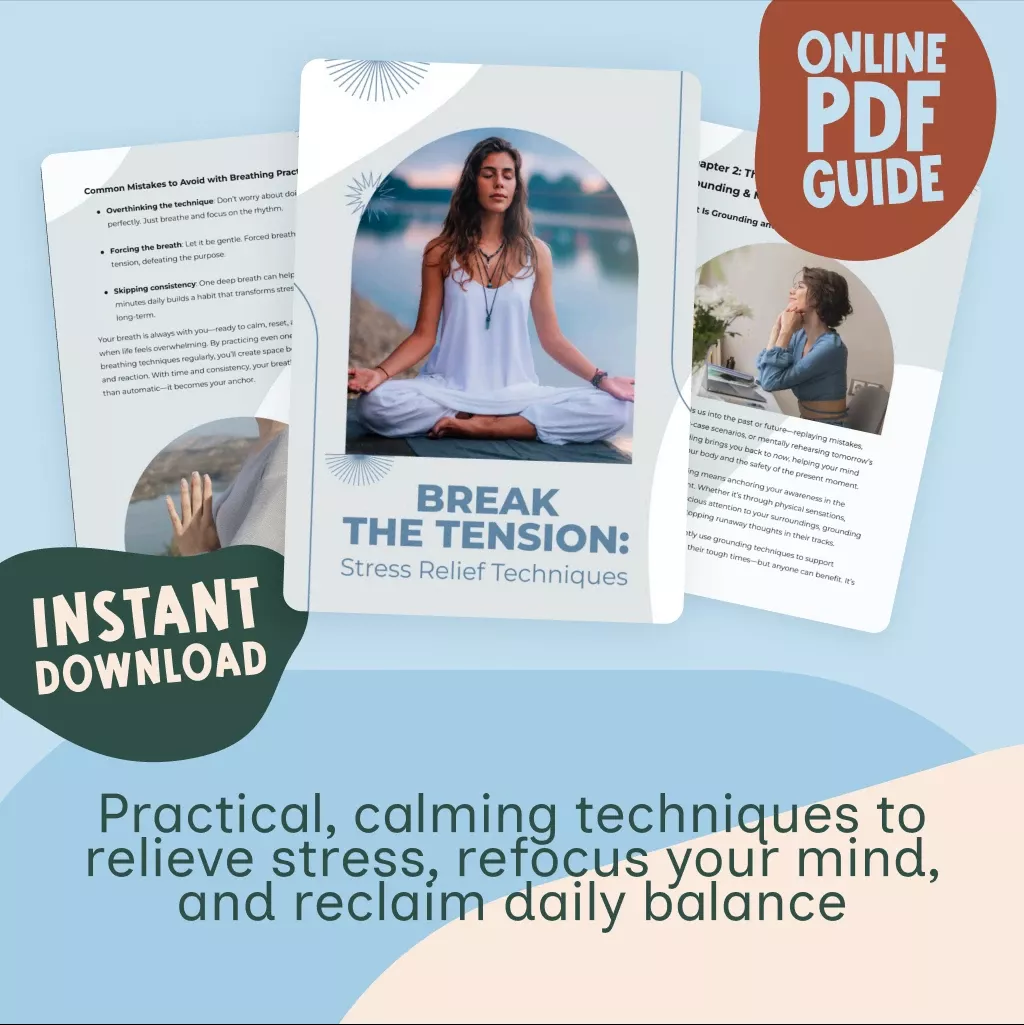
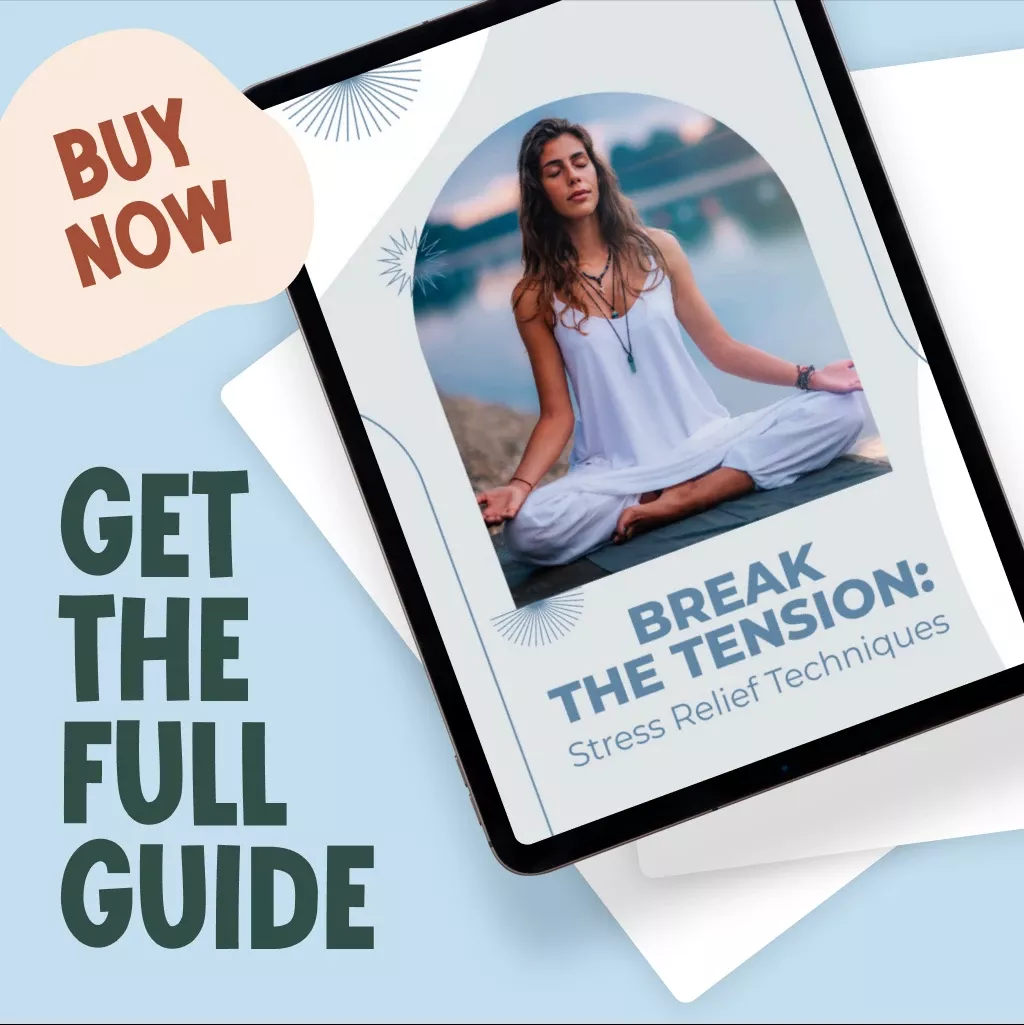
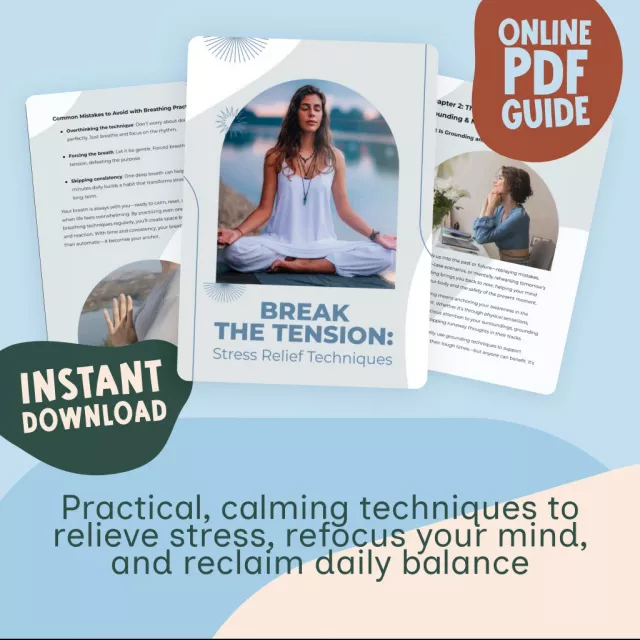
Stress doesn’t wait, and neither should your relief. Break the Tension: Stress Relief Techniques is an informative guide designed to help you take back control with practical, proven stress management techniques and exercises. Whether you’re navigating a hectic day at work or struggling to unwind at home, this beautifully organized digital guide is your go-to companion for breathing exercises, quick meditations, grounding techniques, and time management tips to reduce stress. Simple, human-centered, and instantly accessible, this resource offers tools you can use right away—without overwhelm or complicated jargon.
What’s Inside This Digital Guide?
- Introduction – How to use this guide effectively
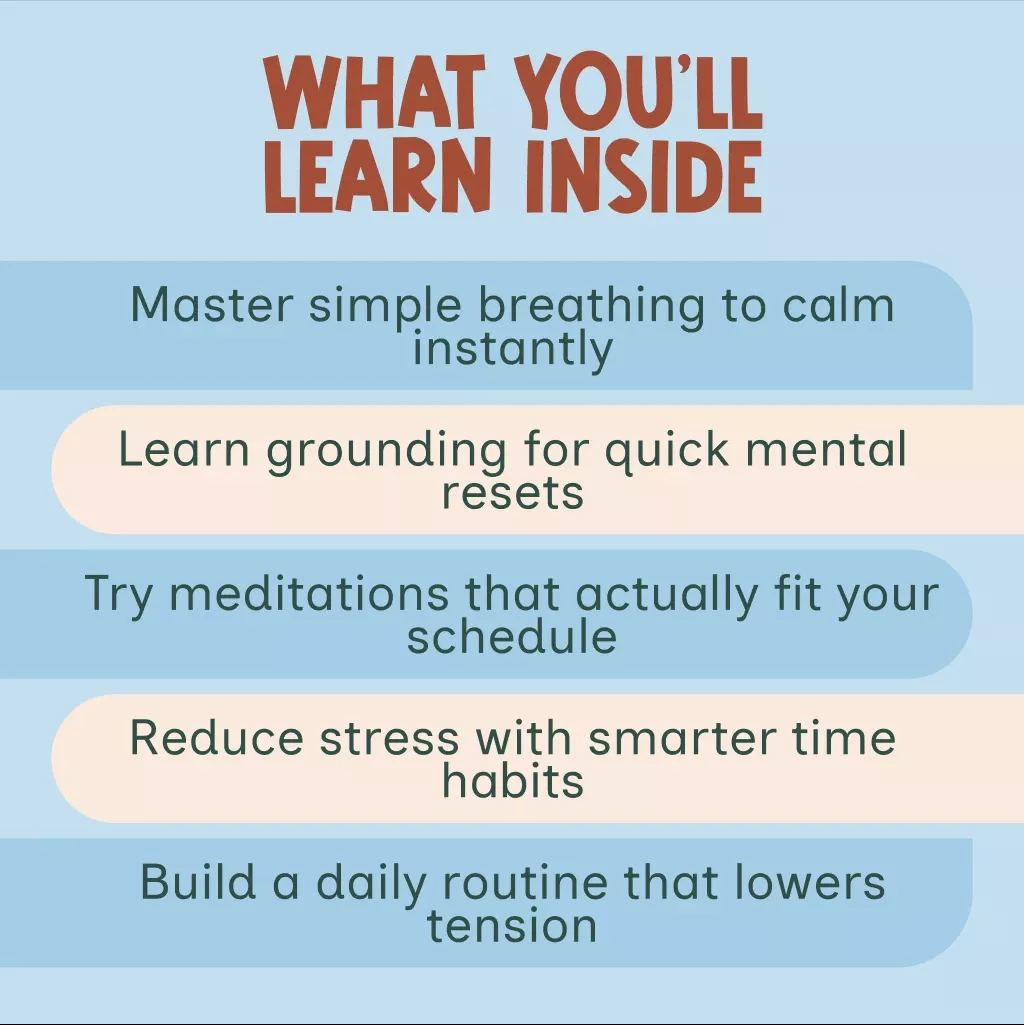
- Chapter 1: Breathe Through It – Simple Breathing Techniques and the science behind breath and stress
- Chapter 2: The Power of the Present – Grounding & Mindfulness strategies with real-life applications
- Chapter 3: Reset Your Rhythm – Quick Meditations That Work, including 5-minute guided routines
- Chapter 4: Take Back Your Time – Stress-busting time management tips and customizable routines
Why You’ll Love It
- Learn anywhere, anytime – A portable PDF format makes stress relief tools available when you need them most
- Practical exercises – Breathing exercises, quick meditations, and grounding techniques that require no special equipment
- Simple planning tools – Time management tips to reduce stress and help you build lasting habits
- No fluff, just calm – Everything is beginner-friendly, science-backed, and focused on real-world results
Perfect For:
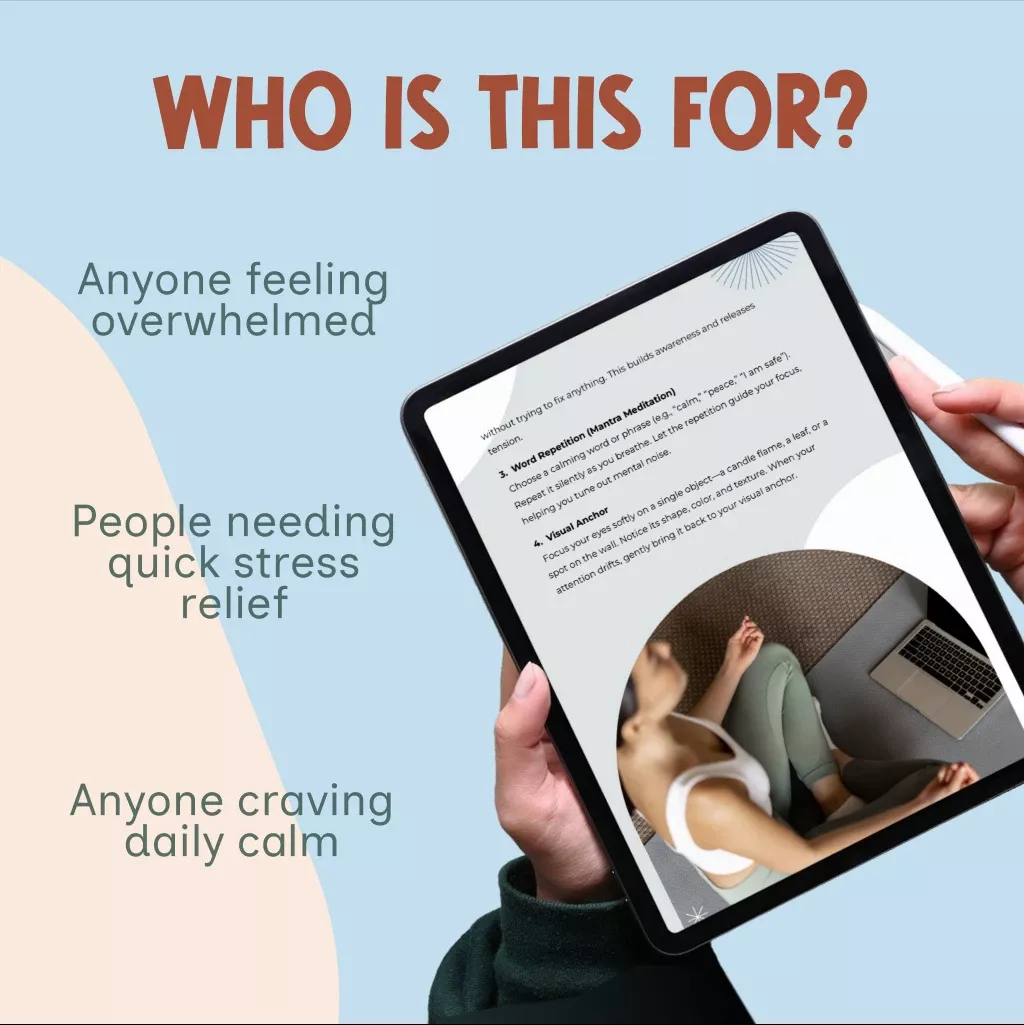
- Busy professionals looking for quick, effective ways to decompress
- Students balancing deadlines and anxiety
- Anyone exploring stress relief for the first time—or returning after burnout
What Makes It Different?
Unlike other generic resources, this informative guide brings together actionable breathing exercises, quick meditations, grounding techniques, and time management tips to reduce stress—all in one calming, easy-to-follow format. It’s more than information—it’s transformation in your back pocket.
Download Your Calm Today
Don’t let tension run the show. Break the Tension: Stress Relief Techniques gives you the tools to reclaim your peace of mind—no matter what life throws at you. Download now and start building your personalized path to calm, one page at a time.
Order cancellation
All orders can be cancelled until they are shipped. If your order has been paid and you need to make a change or cancel an order, you must contact us within 12 hours. Once the packaging and shipping process has started, it can no longer be cancelled.
Refunds
Your satisfaction is our #1 priority. Therefore, you can request a refund or reshipment for ordered products if:
- If you did not receive the product within the guaranteed time( 45 days not including 2-5 day processing) you can request a refund or a reshipment.
- If you received the wrong item you can request a refund or a reshipment.
- If you do not want the product you’ve received you may request a refund but you must return the item at your expense and the item must be unused.
We do not issue the refund if:
- Your order did not arrive due to factors within your control (i.e. providing the wrong shipping address)
- Your order did not arrive due to exceptional circumstances outside the control of simpledevices.shop (i.e. not cleared by customs, delayed by a natural disaster).
- Other exceptional circumstances outside the control of https://simpledevices.shop
*You can submit refund requests within 15 days after the guaranteed period for delivery (45 days) has expired. You can do it by sending a message on Contact Us page
If you are approved for a refund, then your refund will be processed, and a credit will automatically be applied to your credit card or original method of payment, within 14 days.
Exchanges
If for any reason you would like to exchange your product, perhaps for a different size in clothing. You must contact us first and we will guide you through the steps.
Please do not send your purchase back to us unless we authorise you to do so.
Instant download
Your purchase will be available to download once payment is confirmed.
Instant download items don’t accept returns, exchanges or cancellations. Please contact us if you have any problems



i never realized how much stress was affecting my focus until i started using these tools now my mornings feel calmer my afternoons less chaotic and i’m sleeping more peacefully at night the breathing exercises and grounding tips are my favorite quick fixes😌
Alright, here’s the thing — this meditation program has really worked well for me. I don’t say that lightly. Life can get hectic, and finding time to relax isn’t always easy. But these quick meditations fit right into my busy schedule without feeling like a burden. What I like most is how convenient they are. They don’t take much time, maybe just a few minutes, but they do a good job helping me calm down and reset. It’s a nice balance between being effective and fitting into a tight day. These meditations really help me unwind. There are plenty of ways to relax, but for me, these quick sessions hit the right note. After doing them, I feel calmer and more centered — it’s a subtle but noticeable shift that makes a difference.🌿 It’s not just about feeling relaxed for a moment either. That sense of calm carries over into other parts of my day. When my mind is clearer and less stressed, I find I’m more focused and productive. That extra clarity has been a real plus in handling daily tasks and challenges. Another thing I appreciate is how easy it is to use these meditations anywhere — whether I’m at home, taking a quick break at work, or even waiting somewhere. Having a tool that helps me pause and breathe, no matter where I am, makes it easier to build a consistent practice. Overall, this isn’t just another meditation app or program that promises a lot and delivers little. It’s straightforward and reliable, which is exactly what I needed. If you’re juggling a busy schedule and want a simple way to relax without taking too much time or effort, I’d definitely recommend giving this a try.
I’ve been practicing these techniques for a few weeks now, and I’m genuinely surprised at how much calmer I feel. The breathing exercises are simple but instantly effective—they slow my heart rate and help me think more clearly. The grounding techniques are perfect for moments when my mind starts to race, and they bring me back to the present almost immediately. I’ve incorporated the short meditations into my afternoon routine, and they’re a great way to reset my energy. The time management tips have also been incredibly helpful for preventing stress from building up in the first place. My days feel more organized, and I’m handling unexpected challenges with more patience. Even my sleep has improved because I’m not lying awake overthinking. These methods are easy to remember, quick to use, and effective no matter where I am. It’s been a simple yet powerful shift in how I approach stress.
The time management tips are genius! They've helped me reduce stress by prioritizing tasks better - no more last minute panic attacks 😅
Peaceful
Absolutely love this! Quick meditations make such a difference in my day-to-day mood swings.
The breathing exercises? Incredible! My anxiety has definitely decreased since using them regularly 👍
I didn’t realize how much my daily stress was affecting me until I started using these techniques. I’ve always been the kind of person who pushes through the day, ignoring how tense my body feels or how fast my thoughts are racing. The breathing exercises were my first breakthrough. Just a few slow, intentional breaths in the morning help me start the day feeling grounded. The grounding techniques are my mid-day savior. Whether I’m stuck in traffic or juggling multiple tasks at work, they pull me back into the moment, reminding me that I can handle things one step at a time. The meditations are short but incredibly effective—sometimes just three or four minutes—and I feel like I’ve had a mental reset. The time management advice has been life-changing in its simplicity. I’ve stopped overloading my calendar and started leaving space for myself, which means I’m not constantly running on empty. Over the past few weeks, I’ve noticed I’m less reactive, more patient, and more focused on what actually matters. My sleep has improved, my mornings feel calmer, and I’m ending the day without that constant buzzing in my head. It’s made stress feel less like a permanent weight and more like something I can navigate.
Amazing stress relief techniques! The breathing exercises are so calming and grounding techniques really help me feel centered. Time management tips have improved my productivity too!
I've been practicing the quick meditations daily, it's a real mood lifter 😊 Grounding techniques also make me feel more present.
Simple tools that help me feel calmer and more focused daily. 💆♀️
This has totally transformed how I deal with stress. Quick meditations clear my mind while time management tips help me stay organized 👍
What I appreciate most about this is how practical it is. The breathing exercises are quick, so I can use them before meetings or during my commute. The grounding methods keep me from spiraling when stress hits suddenly. The meditations are peaceful and help me feel refreshed, and the time management suggestions have made my days flow much more smoothly. Since I started, I’ve noticed I’m more productive, more patient, and less reactive to small annoyances. I feel in control, even during busy weeks. It’s not about eliminating stress completely—it’s about handling it in a way that leaves me feeling stronger.
Feeling stressed? Try these easy-to-follow breathing exercises and quick meditations, they're lifesavers for sure!
The grounding techniques are phenomenal! They helped reduce my anxiety levels significantly. Plus, time management tips have made my days less chaotic 🙌
Helpful🧘♂️
The time tips help me manage tasks without overwhelm.
Never thought I'd find something as helpful as this for managing stress. From deep breaths to efficient planning methods... everything is top-notch here!
For a long time, I believed I simply didn’t have enough time to focus on stress relief. But after trying Break the Tension: Stress Relief Techniques, I’ve discovered that it’s not only possible but essential to take a moment for myself—even during the busiest of days. The breathing techniques are so quick, taking less than a minute, yet they work wonders in calming my nerves instantly. I never knew how effective such a small, simple practice could be. The grounding tips have also been a game changer, especially in tense situations like difficult conversations. I’m able to stay present and composed, which has made a noticeable difference in my interactions. As for the meditations, they’re short enough to fit into any schedule, and I’ve found them to be incredibly refreshing. It’s hard to believe how much a few minutes of mindful breathing can do. What’s also stood out is the time management advice—it’s transformed the way I approach my daily schedule. I no longer feel like I’m constantly running behind or scrambling to catch up. With a better plan, I’m now able to stay on track and be more productive at work. Outside of work, I feel more relaxed at home, and my mood has become more stable overall. On top of that, I’ve been sleeping better, waking up feeling more rested and ready to take on the day. This guide has truly helped me find a balance in my life, and I highly recommend it to anyone who feels overwhelmed by the pressures of daily living
The grounding techniques are amazing, they really help me stay present in stressful situations. Plus, they're super easy to do anywhere!
Refreshing
The time management tips have been incredibly helpful for reducing daily overwhelm. My productivity has gone up since implementing them 😊
I’ve been using these techniques every morning before starting work, and they’ve completely changed how I approach my day. The breathing exercises help me start off calm, and the grounding tips keep me steady during stressful meetings. The meditations are short but effective, making it easy to squeeze in a break without feeling guilty. The time management suggestions have helped me plan my tasks better, so I don’t end the day feeling frazzled. I’ve noticed I’m more focused, my mood is steadier, and I’m not as reactive when things go wrong. It’s become a daily habit I genuinely look forward to.
It helps me start each day with clarity and focus - those morning breathing exercises are a lifesaver 🙌
I’ve got to say, these breathing exercises have made a big difference for me. Not too long ago, stress seemed to be a constant part of my life—little things would throw me off balance more than they should. But since I started practicing these exercises, I’ve noticed a real change in how I handle stressful moments. Life still throws challenges my way, no doubt about that. Things can get tough sometimes. But now, when I start feeling overwhelmed or tense, I turn to these breathing techniques. They’re simple enough to do anywhere, which makes them easy to use whenever I need a quick reset. What really stands out to me is how calming they are. After doing the exercises, I feel like everything slows down. It’s like a blanket of calm wraps around me, clearing away the chaos and helping me find clarity. The shift happens pretty fast too—one moment I’m feeling stressed, and the next I’m noticeably more relaxed. It’s a relief to have that tool at hand. Besides just managing stress, I’ve found that these exercises help me stay more focused throughout the day. When my mind starts racing or I feel jittery, a few minutes of deep, controlled breathing brings me back to center. It’s become a simple but powerful way to keep my mental and emotional balance in check. I also appreciate that these techniques don’t require anything special—no equipment, no fancy setting, just a few moments to focus on my breath. That makes it easy to build them into my daily routine, whether I’m at home, at work, or even out and about. If you’re someone who deals with stress or just wants a way to find some calm during busy days, I’d definitely recommend giving these breathing exercises a try. They’ve been a real help for me, and I think they could be for others too. Finding that sense of peace is something worth having
Who knew that grounding could make such an impact? It's been great for managing anxiety during high-stress moments at home or work.
I used to struggle with time management but now I feel more organized thanks to their practical tips 👍
If you're looking for ways to reduce stress without spending hours on self-care rituals, this is perfect! It offers various techniques that take only minutes yet give lasting relief from tension 💆♀️💯
Practical
Stress used to feel like a constant companion for me, lingering in both my mind and body throughout the day. Break the Tension: Stress Relief Techniques has completely changed that for me. The techniques provided are simple, yet incredibly effective in helping me release tension and find calm amidst the chaos of everyday life. The breathing exercises are a quick reset, offering almost immediate relief when I’m feeling overwhelmed. Just a minute or two of focused breathing helps me feel centered and ready to take on whatever comes next. I’ve also been pleasantly surprised by how refreshing the short meditations are—although they only take a few minutes, they leave me feeling renewed and clear-headed, even on my busiest days. One of the most valuable aspects of this guide is the grounding techniques. They’ve helped me stay steady and composed, even during hectic moments or stressful situations. The time management tips are another highlight for me; they’ve taught me how to organize my day better, preventing stress from piling up in the first place. I’m now able to manage my time more efficiently, giving me a sense of control and reducing anxiety. What I appreciate most is how practical and easy to incorporate these techniques are into daily life. They don’t require major changes or complicated routines, but their impact is substantial. This makes the product feel like an essential tool I can rely on, not just a temporary fix.
I’ve found that combining these techniques throughout the day works best for me. I start with breathing exercises in the morning, grounding in the afternoon when my focus drifts, and meditations in the evening to relax. The time management advice ties it all together by helping me avoid stressful rushes. The result is a calmer, more balanced day.
🕊️
Those quick meditation sessions? Absolutely fantastic! I feel more relaxed after every session. 😌
i’ve been dealing with high stress for years and most of the advice i’ve read in the past felt unrealistic or too time-consuming this is different the breathing exercises are short enough to use during a busy workday the grounding tips don’t require special tools and the meditations are peaceful without feeling forced i love that the time management suggestions are practical instead of overwhelming i’ve started organizing my day in a way that leaves room for rest instead of cramming in as much as possible it’s made me more productive and far less anxious i’ve even started to notice how my body feels during the day instead of ignoring the tension like i used to now when i feel my shoulders tightening or my jaw clenching i can pause take a deep breath and reset it sounds simple but the difference it’s made in my focus patience and overall energy is huge
Everything feels approachable yet powerful for calming my mind quickly.
Love the breathing exercises in this guide, they've really helped me manage my stress levels. I feel so much calmer and focused now! 😊
So let's talk about these techniques. I mean, seriously, they've totally changed the game for me! It's like I was living in a world of chaos and then boom - suddenly there was calm. I'm not even kidding when I say that I've never felt more grounded than now. You know that feeling when you're all over the place? Like your thoughts are running wild and nothing makes sense? Well, kiss those days goodbye because with these techniques, it feels like my feet are firmly planted on solid ground. And don't get me started on how easy they are to follow! No complex jargon or confusing instructions here folks. Just plain and simple steps that anyone can understand - even if you're completely new to this whole thing. But what really blows my mind is just how effective they actually are. Trust me when I say this; it’s not one of those things where you have to wait weeks or months to see any changes - no sirree! We’re talking instant results here people! One moment you're feeling lost and confused, the next minute everything seems clear as day! It might sound too good to be true but believe me; it isn’t! These techniques truly deliver what they promise – grounding in an uncomplicated yet highly effective way. So yeah, if anyone out there is looking for something reliable and powerful enough to make a real difference in their life – give these techniques a shot. They've worked wonders for me and who knows? Maybe they'll do the same magic for you too!
The quick meditations are perfect for when you're on-the-go and need a moment of calm. They're surprisingly effective!
Balanced
calming methods that work even when i only have minutes
The combination of all these techniques has done wonders for my mental health. Highly recommend this guide to everyone struggling with stress.
🌸🌸🌸🌸🌸
One of the biggest changes for me since starting these techniques is how I respond to unexpected challenges. Before, even a small disruption could throw off my whole day. Now, I’m able to take a moment, breathe, and think clearly before reacting. The breathing exercises are my go-to tool for this—they help me slow down my racing thoughts. The grounding techniques are equally powerful, especially when I’m feeling disconnected or overwhelmed; they bring me back into my body and into the present moment. The meditations are short but seem to have lasting effects on my mood. I’ve started using them as a way to break up my workday, and they’ve made a huge difference in my focus. The time management strategies were a surprise benefit—I didn’t expect them to reduce my stress so much. By structuring my day with realistic goals and built-in breaks, I’ve eliminated that constant “behind schedule” feeling. This isn’t just about quick fixes; it’s about creating a calmer, more balanced lifestyle.
Wow, the breathing exercises have been a lifesaver! They're quick and easy to do anywhere. I've noticed my stress levels drop significantly since starting them.
meditations are short but deeply relaxing and restorative every time
Grounding
This has genuinely changed how I handle stress at work. The quick meditations are perfect for short breaks - they leave me feeling refreshed and focused.
I feel clearer and less reactive during stressful interactions.
these tools have become part of my everyday life the breathing exercises calm me first thing in the morning the grounding tips help me stay present during work the meditations are short enough to use before bed and the time tips have stopped me from overbooking my schedule i’m less tense more focused and sleeping better than before
I'm normally skeptical about things like this but honestly, it works! The time management tips alone have reduced so much of my daily pressure 🙌
The grounding techniques offer instant relief from tension and anxiety - it's incredible how effective they are 😊
I’ve been using these techniques for a month now, and the difference is remarkable. The breathing exercises are simple but instantly calm my nervous system. The grounding techniques help me stop overthinking and actually notice my surroundings, which is especially helpful when I’m anxious. The meditations are short, but they feel like hitting a “refresh” button in my brain. I never thought time management tips would be part of stress relief, but now I see how much chaos they prevent. By planning my day in a realistic way, I’ve stopped ending the day feeling behind and frustrated. I’m handling challenges more calmly, communicating more clearly, and even enjoying my downtime more because my mind isn’t constantly running through to-do lists. I’ve also noticed physical changes—less tension in my neck and shoulders, fewer headaches, and deeper sleep. It’s not that stress has disappeared, but now I have the tools to navigate it without letting it take over.
The combination of all these strategies is seriously powerful for managing stress levels 💪 Big fan here!
I use these methods almost every day now. The breathing exercises help when I wake up feeling anxious, and the meditations give me a moment to reset in the middle of the day. The grounding practices are surprisingly effective for bringing me back into the present moment. I’ve also started using the time management strategies, which make my days flow more smoothly. It’s not complicated, and that’s what makes it work. I feel calmer, more organized, and less weighed down by stress. It’s comforting to know I have tools I can rely on when life gets overwhelming.👌
Centering
quick meditations that actually fit into my unpredictable daily schedule
I absolutely adore the time management tips! They've helped me stay organized, which makes everything less stressful. A total win-win situation!
this has become part of my everyday routine in a way i didn’t expect i use the breathing exercises first thing in the morning to set the tone for my day then throughout the day i rely on the grounding tips especially during stressful calls or tight deadlines the meditations have become my evening ritual helping me let go of whatever happened that day the time management advice has changed the way i schedule my tasks so i’m not setting myself up for burnout i’ve noticed i’m more patient with people less likely to overreact and more willing to step away from my desk when i need a reset my sleep is better my mood is more stable and i’m starting to feel like i have control over how i handle stress instead of the other way around
This is awesome for anyone dealing with lots of stress at work or home - it’s got all you need: breathing exercises, grounding techniques, even time management tips! 🙌
💆♂️💤
I was skeptical about whether quick techniques could actually make a difference, but these have exceeded my expectations. The breathing exercises are simple and instantly calm me down. The grounding tips help me feel more present, especially when my mind starts to spiral. I love that the meditations are short enough to fit into my lunch break. The time management advice has also helped me structure my day so I’m less likely to get overwhelmed. I’ve noticed I’m sleeping better, thinking more clearly, and feeling more in control of my emotions. It’s a relief to have practical tools I can use anytime.
Focused
I've never been great with time management but the tips here have helped me become more organized which has reduced my stress significantly.
I started using the breathing techniques during my commute, and it’s made such a difference. I arrive at work calmer and more focused. The grounding exercises help me stay present instead of getting caught up in what might go wrong. The meditations are relaxing, and the time management tips have made my evenings feel less rushed. My overall stress feels more manageable, and I’m finding it easier to enjoy my day. These tools are simple but surprisingly powerful. I never thought I could feel this much relief from just a few minutes of practice.
These techniques have made such a positive impact on my life. My anxiety levels have dropped and I feel much more relaxed throughout the day.
Uplifting
I was skeptical at first but now I swear by these grounding techniques - they provide immediate relief from any stressful situation!
I never realized how much I needed these quick resets throughout the day. The breathing exercises help me pause and slow down. The grounding techniques keep me from feeling scattered, and the meditations are perfect for clearing my head. The time management tips are an added bonus—they make the rest of my day feel more manageable. I’ve found myself looking forward to these little breaks instead of pushing through stress. My productivity is up, my mood is better, and I feel more in control of my time. It’s been a huge improvement in how I handle daily challenges.
Love this stress relief guide! The breathing exercises are so simple yet effective. I've noticed a huge difference in my anxiety levels.👍
Steadying
This guide has really helped me manage my time better, which has significantly reduced my stress levels - it's amazing!
I like that these methods are short but powerful. The breathing exercises help me relax in just a few deep breaths. The grounding tips make me aware of my surroundings and help me feel safe and steady. The meditations are peaceful and never feel like a chore. The time management advice keeps my day from becoming overwhelming. Using all of these together has made a noticeable difference in my stress levels. I feel calmer, more focused, and more capable of handling whatever comes up during the day. It’s a set of tools I’ll keep coming back to.
These tips for reducing stress have changed the way I handle pressure at work. Especially love the time management tips!
the best part about these practices is how practical they are the breathing exercises calm my mind in under a minute the grounding tips keep me from spiraling when stress hits and the meditations feel like a gentle reset for my brain the time management advice is clear and easy to follow it all works together seamlessly
I was skeptical about quick meditations but they truly do wonders for calming down when things get tough.
Soothing
Grounding methods here help me stay present even on hectic days.
This is an excellent resource if you need some solid strategies to deal with stress effectively. A big thumbs up from me!😊
I’ve built these techniques into my daily routine, and the difference has been incredible. In the mornings, I use the breathing exercises to start my day feeling calm and clear-headed. During work, I rely on grounding tips when I feel my thoughts spiraling, and it brings me right back to the present. The meditations are short enough to do on a coffee break, yet they leave me feeling refreshed and focused. In the evenings, the time management advice helps me wind down without the usual rush. I’m more patient, my sleep is better, and I feel less drained by daily stress. It’s surprising how these small practices add up to such a big impact on my mood and focus.
The quick meditations are amazing. Just 5 minutes and my mind feels clear, ready to tackle anything!
The best thing about this is how approachable it is. I don’t need a quiet room for an hour—just a few minutes to follow the steps. The breathing exercises slow my heart rate almost instantly. The grounding methods help me focus on what’s right in front of me. The meditations are gentle but powerful, and the time tips have reduced my daily chaos. I’ve been using them before important meetings, during busy mornings, and even before bed to unwind. My stress feels less like a constant weight and more like something I can actually manage. It’s a big relief.
Time management tips were super helpful. Finally getting things done without feeling overwhelmed 😊
Relaxing
I appreciate how varied it is - there's something for everyone regardless of what helps them relax most 🙌
i didn’t think such small actions could make such a big difference but these breathing and grounding exercises instantly change how i feel the meditations are short enough for my schedule and the time tips keep me ahead of stress instead of behind it
Love the breathing exercises! They're super easy to follow and honestly, they've helped me keep my cool in stressful situations. Big thumbs up 👍
These tools have helped me more than I expected. I use the breathing exercises when I feel my chest tighten, and within minutes I feel calmer. The grounding methods are great for high-pressure moments, and the meditations are a nice way to transition into relaxation at night. The time management advice is helping me keep my day organized, so I’m not constantly feeling behind. I’ve noticed that I recover from stress much faster now. Even when things go wrong, I’m able to stay focused and think clearly. It’s a comforting feeling to know I have these strategies to rely on.
Reliable
Time management tips that actually work? Yes please! These tips have made my day-to-day tasks seem less daunting.
Restorative
The quick meditations are refreshing, like a mini vacation for your mind. Highly recommend this!
i love that i don’t need any special equipment or setting to use these techniques i’ve done the breathing exercises in the car the meditations on my couch and the grounding tips during work meetings the flexibility makes it easy to keep up with
Resilient
The grounding techniques here are my favorite—they’re so simple, yet they bring me out of my head and into the moment instantly. The breathing exercises are great for calming my body, and the meditations help me release mental tension. The time management strategies make a big difference too. By planning my day more intentionally, I’m avoiding the last-minute rush that used to make me anxious. I feel more in control, and I’m noticing that I can recover from stressful moments faster than before. It’s reassuring to have tools I know will work no matter where I am.
Meditation was never my thing until I tried the quick meditations here - they're simple yet powerful 💪
Love this! The breathing exercises really help me unwind after a long day. I've noticed an improvement in my overall stress levels. 😊
i wasn’t sure i’d stick to any stress relief routine but this has been so easy to follow the breathing exercises are quick and calm me instantly the grounding tips keep me from overthinking and the meditations are short enough to fit into my evenings the time management suggestions have made my days smoother so i’m preventing stress before it even starts i’ve noticed better sleep more stable energy and a more positive outlook
Wow, these quick meditations are perfect for lunch breaks at work. They leave me refreshed and ready to tackle the rest of the day!
The time management tips have made a huge difference in reducing my daily stress. Highly recommend trying them out!
Mindful
Tried the grounding techniques during a stressful situation, worked like magic! It's now part of my routine.
These techniques have helped me in so many different situations. The breathing exercises are perfect for calming down before a meeting. The grounding tips are great for bringing my attention back when I’m feeling distracted or anxious. The meditations help me relax before bed, and the time management advice has made my days feel less overwhelming. I’ve even started using the breathing methods during workouts to stay focused and steady. It’s such a versatile set of tools. I feel more resilient and better able to handle whatever comes my way. It’s not just stress relief—it’s building a calmer lifestyle.
Gentle, effective, and easy to remember when tension starts rising.
Been doing the breathing exercises before bed...best sleep I've had in ages 🌙
The grounding techniques have helped me stay present even on hectic days, couldn't ask for more 👍
Wow, this stress relief guide is a lifesaver! The breathing exercises are simple yet effective. I feel calmer and more centered after each session.
If you’re someone who finds themselves constantly battling stress, Break the Tension: Stress Relief Techniques might just be the guide you’ve been looking for. What I really appreciate about this book is that it doesn’t ask for a huge time commitment. You can incorporate the techniques into your day without having to set aside a lengthy chunk of time. The breathing exercises work wonders in just a few minutes, helping me quickly center myself. The grounding tips are simple but incredibly effective, and the best part is that they can be done anywhere—whether you’re at home, at work, or even in transit. The short but impactful meditations provide a quick mental reset when you need it most, making it easy to pause and regain control during a hectic day. An unexpected bonus has been the time management advice, which has helped me streamline my tasks and avoid the stress of last-minute rushes. Since incorporating these strategies into my routine, I’ve noticed a significant improvement in my overall well-being. I feel calmer, more focused, and less reactive to the things that once would have easily triggered me. It’s like having a toolkit for handling life’s stressors, no matter how big or small
Energizing
I’ve started using the breathing exercises before big presentations, and they work wonders. My hands don’t shake as much, and I can think more clearly. The grounding techniques help when I feel my mind racing. The meditations are short but leave me feeling refreshed, even on busy days. The time management tips have made my schedule feel less chaotic. I’m finding it easier to focus on what matters and let go of the little things. These tools have made a noticeable difference in my stress levels and my overall sense of well-being. I wish I’d learned them sooner.
I started using these techniques a month ago, and boy what an improvement! My sleep quality has improved drastically thanks to the breathing exercises 🙌
sometimes i only have a few minutes between tasks and that’s enough for these exercises the breathing resets my mind the grounding brings me back to the present and the short meditations leave me feeling lighter it’s simple but effective
If you struggle with staying grounded like me, then you'll appreciate these techniques as much as I do. They've truly helped me regain control over my emotions during high-stress times 💪
Love the breathing exercises! They're so simple, yet they work wonders for my stress levels. I feel calmer and more focused after each session.
Calming
i started using the breathing techniques in the mornings and noticed a difference right away my mind feels clearer and i’m not rushing into the day the grounding tips are a lifesaver during busy afternoons the meditations help me unwind at night and the time management suggestions keep me from overloading my schedule
I've always struggled with time management but this has given me some great tips. My days are less chaotic now 👍
I’ve tried other stress relief methods, but they often felt unrealistic for my schedule. This is different. The techniques are quick, easy, and effective. The breathing exercises help me feel grounded within minutes. The meditations are peaceful and leave me feeling refreshed. The time management tips help prevent stress before it even starts. I like that I can use these anywhere—at my desk, on the bus, or before going to sleep. It’s made me more patient, less reactive, and more focused on what matters most. My days feel lighter, even when they’re busy.
The benefits of these exercises extend beyond stress relief - I'm sleeping better and feeling more positive overall 😊
Effective
these techniques are easy to remember and even easier to use i’ve practiced the breathing while waiting in line the grounding during stressful conversations and the meditations before bed the time tips help me prevent chaos before it starts
Incredible how such small changes can make big impacts on your wellbeing. Definitely worth trying out if you're feeling overwhelmed by stress.