

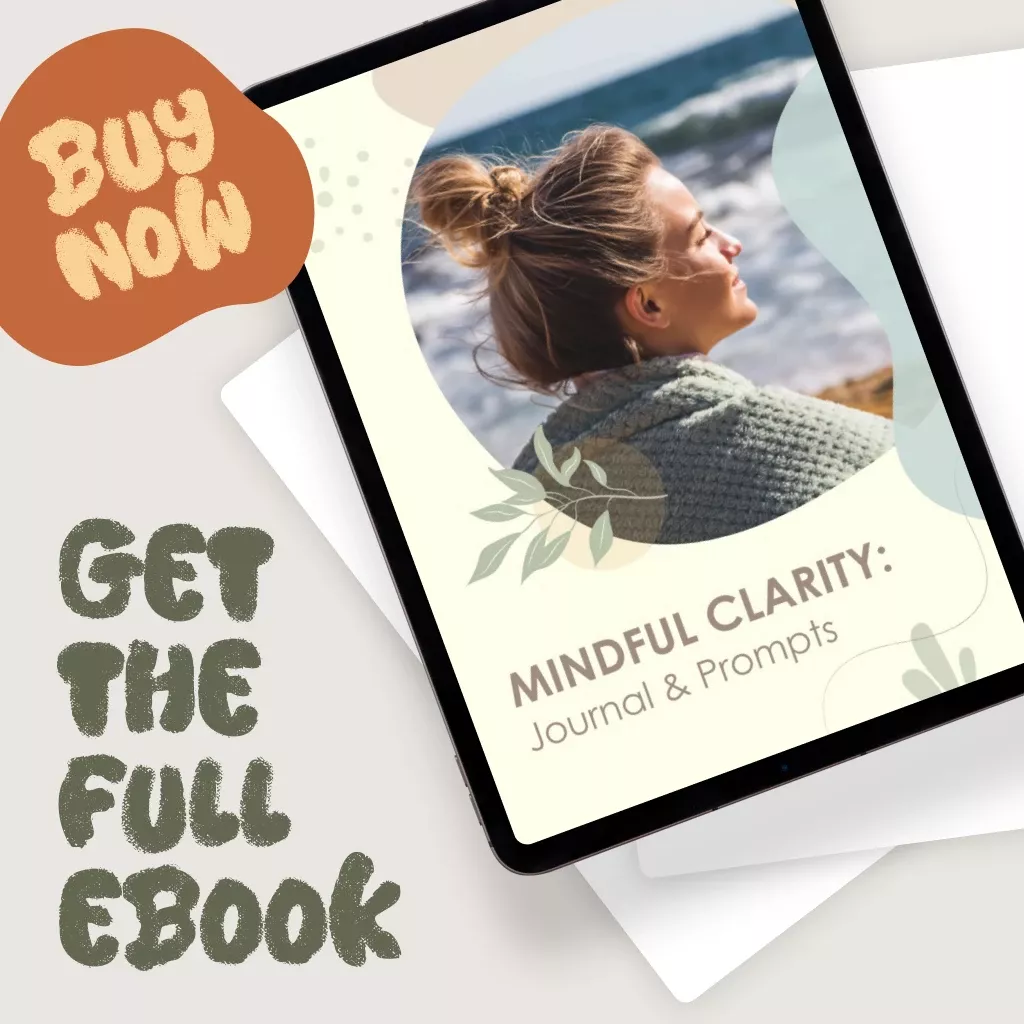
Find Your Calm, One Page at a Time
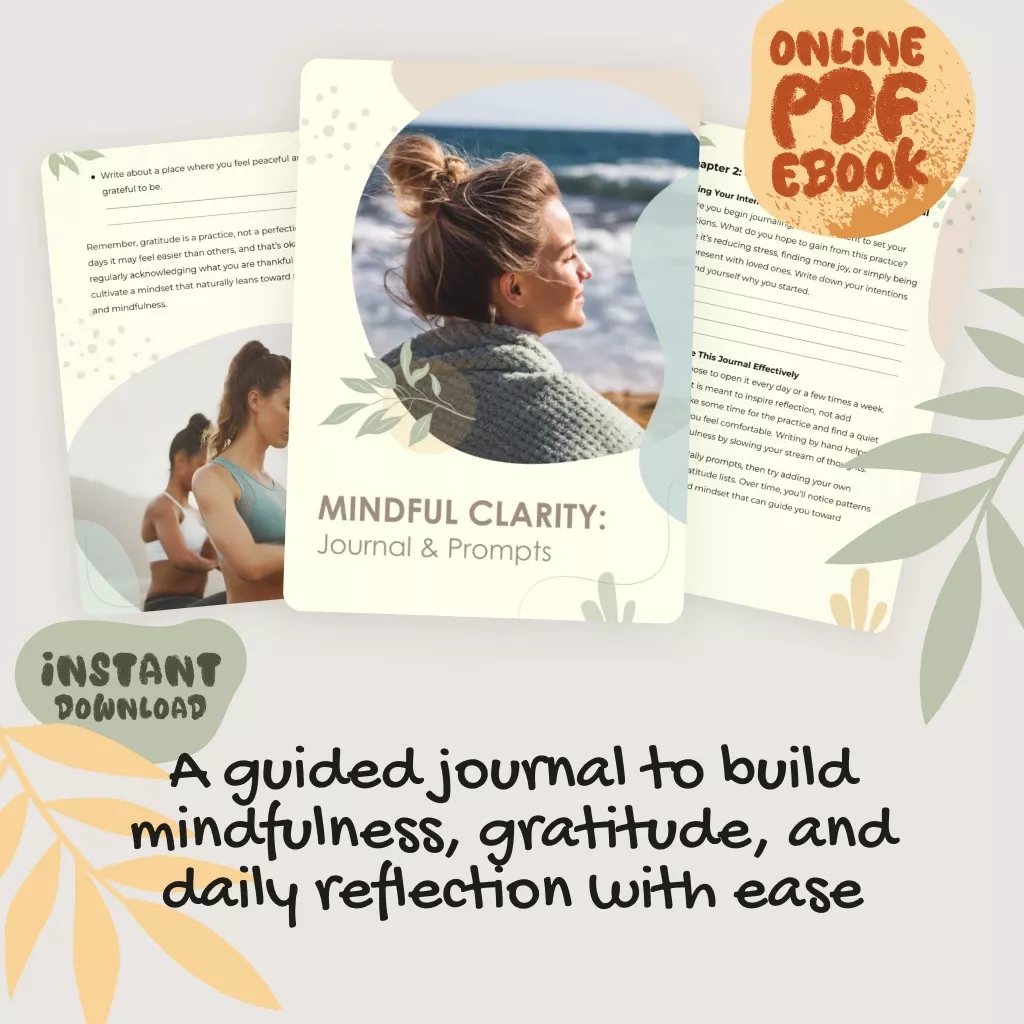
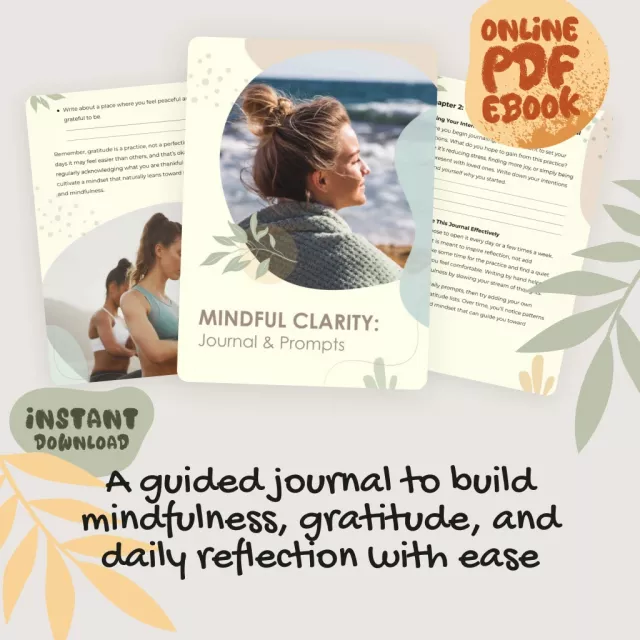
Start your journey toward inner peace and mental well-being with Mindful Clarity: Journal & Prompts, a thoughtfully designed digital download that guides you to slow down, breathe deeply, and reconnect with yourself. This printable journal is filled with daily mindfulness prompts, gratitude exercises, and reflective quotes—crafted to help you feel more grounded, present, and grateful each day.
Whether you’re new to mindfulness or looking to deepen your current practice, this beautifully structured eBook offers a clear path to clarity and emotional balance. Easy to print or use digitally, it’s the perfect companion for your morning routine, evening wind-down, or anytime you need a mindful pause.
What’s Inside
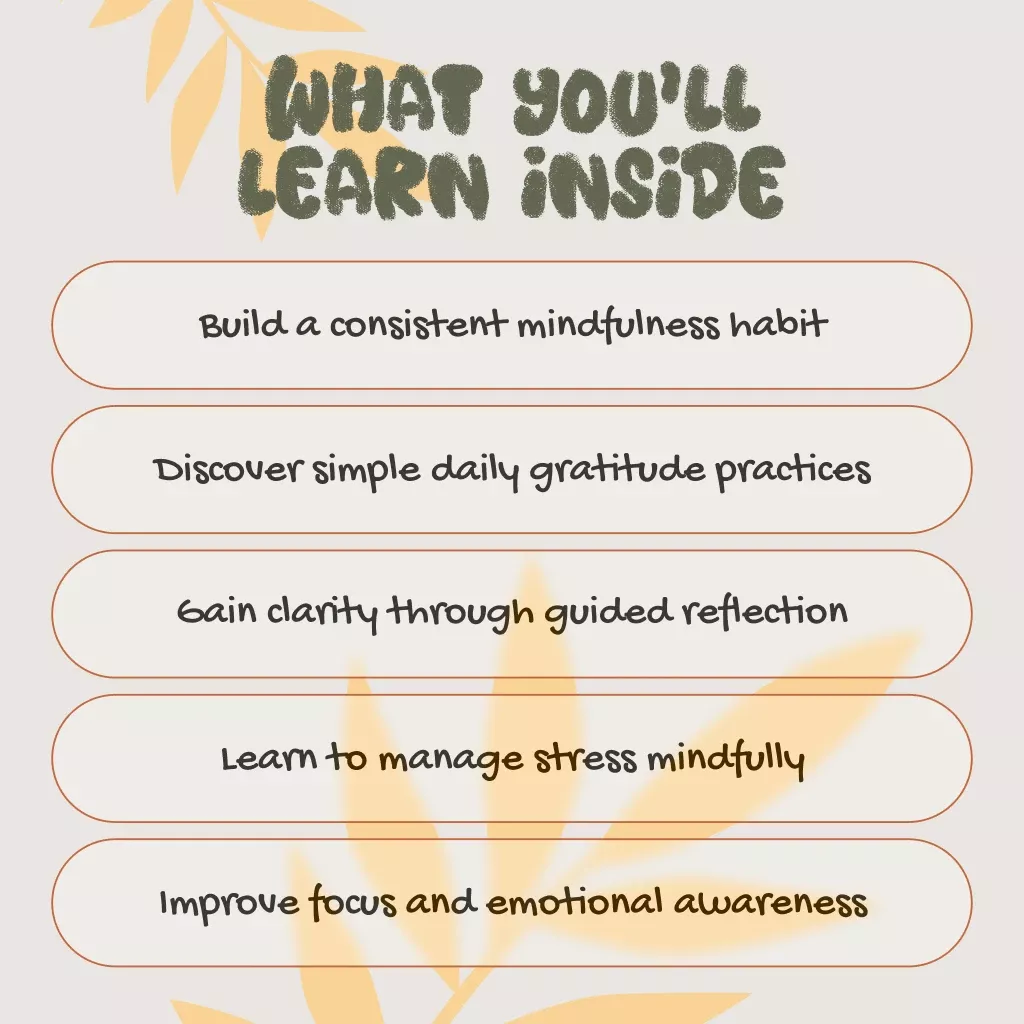
- Gentle guidance on building a mindfulness practice that fits your life
- Daily mindfulness prompts to help you stay present and intentional
- Gratitude exercises designed to rewire your mindset for joy
- Reflective quotes paired with journal prompts to inspire deep thought
- Real-life tips for staying consistent, even on busy days
Each section is designed to ease you in, keep you motivated, and guide you toward meaningful self-reflection. But that’s just a glimpse—there’s so much more waiting inside.
Why You’ll Love It
- Boost mental well-being with mindful routines that promote clarity and calm
- Develop a gratitude mindset using simple, research-backed exercises
- Stay consistent with structured guidance and motivational reflections
- Feel inspired by handpicked reflective quotes that truly resonate
- Easy to use—print it or use digitally on your tablet or laptop
Who It’s For
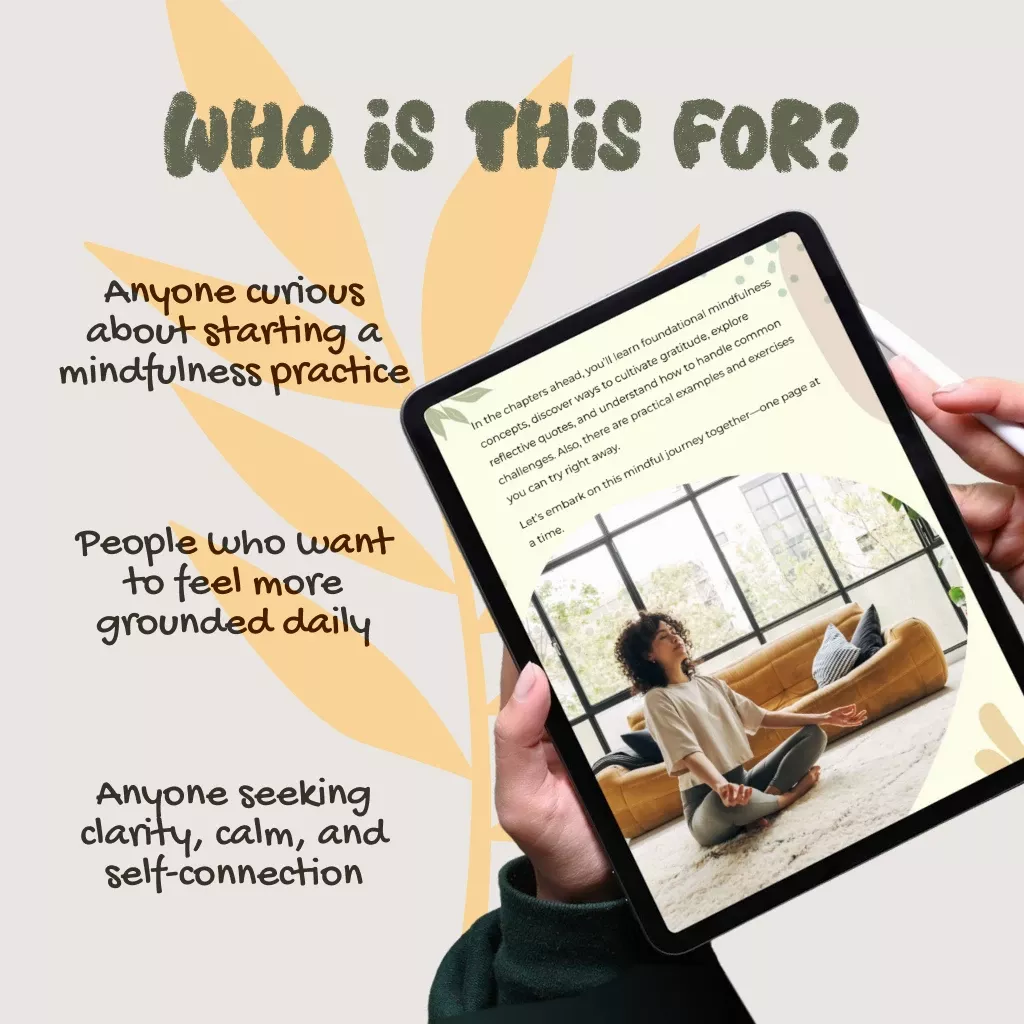
This guide is for anyone seeking more peace, purpose, and presence in their everyday life. Whether you’re overwhelmed, curious about mindfulness, or simply want to start a daily gratitude practice, Mindful Clarity: Journal & Prompts is your gentle guide to cultivating a more intentional life.
What Makes It Different
Unlike other digital journals, this eBook blends education, inspiration, and action. You’re not just handed blank pages—you’re given practical tools, supportive guidance, and soulful content rooted in science and real-world mindfulness practice. With its combination of daily mindfulness prompts, gratitude exercises, and reflective quotes, it’s designed to transform not just your habits, but your mindset.
Ready to Begin?
Download Mindful Clarity: Journal & Prompts today and take the first step toward a calmer, more centered you. Whether you’re printing it for your desk or using it digitally on the go, this journal is here to support your growth—one mindful prompt at a time.
Order cancellation
All orders can be cancelled until they are shipped. If your order has been paid and you need to make a change or cancel an order, you must contact us within 12 hours. Once the packaging and shipping process has started, it can no longer be cancelled.
Refunds
Your satisfaction is our #1 priority. Therefore, you can request a refund or reshipment for ordered products if:
- If you did not receive the product within the guaranteed time( 45 days not including 2-5 day processing) you can request a refund or a reshipment.
- If you received the wrong item you can request a refund or a reshipment.
- If you do not want the product you’ve received you may request a refund but you must return the item at your expense and the item must be unused.
We do not issue the refund if:
- Your order did not arrive due to factors within your control (i.e. providing the wrong shipping address)
- Your order did not arrive due to exceptional circumstances outside the control of simpledevices.shop (i.e. not cleared by customs, delayed by a natural disaster).
- Other exceptional circumstances outside the control of https://simpledevices.shop
*You can submit refund requests within 15 days after the guaranteed period for delivery (45 days) has expired. You can do it by sending a message on Contact Us page
If you are approved for a refund, then your refund will be processed, and a credit will automatically be applied to your credit card or original method of payment, within 14 days.
Exchanges
If for any reason you would like to exchange your product, perhaps for a different size in clothing. You must contact us first and we will guide you through the steps.
Please do not send your purchase back to us unless we authorise you to do so.
Instant download
Your purchase will be available to download once payment is confirmed.
Instant download items don’t accept returns, exchanges or cancellations. Please contact us if you have any problems



I’ve been using this journal as part of my morning routine for a while now, and it’s made a noticeable difference. Mornings can often feel slow or uninspired, but having these prompts to start my day really helps me focus and set a positive tone. It’s a simple way to bring a bit of calm and clarity before jumping into whatever comes next. ☀️ What I really like are the mindfulness prompts—they feel thoughtful and well-crafted without being overwhelming. They’re not just generic questions; they actually make me pause and reflect in a way that feels natural and encouraging. It’s like having a gentle reminder to check in with myself and focus on what matters most for the day ahead. Starting my day with this kind of intention makes the challenges that pop up later feel more manageable. Even if things don’t go perfectly, I notice that I’m better equipped to handle stress and stay grounded. That little boost of mindfulness early on creates a ripple effect that helps me throughout the day. Beyond just the prompts, the design and layout of the journal are really user-friendly. It’s easy to write in, and there’s enough space to jot down thoughts without feeling rushed. The pages invite reflection without pressure, which makes it more likely that I’ll stick with it day after day. Overall, if you’re looking to bring a bit more focus and calm to your mornings—or just want a tool to help you be more mindful—I think this journal is worth trying. It’s a practical way to build a positive habit that can really set a good pace for your day. 😊
Encouraging✨
I didn’t expect such a small daily practice to make such a big difference, but this has quickly become a highlight of my mornings. The prompts are gentle yet thought-provoking, giving me a reason to pause before the day begins. The quotes feel perfectly timed, often matching my mood in uncanny ways. I love how the structure gives me enough guidance to get started, yet enough space to explore my own thoughts. Over the past few weeks, I’ve noticed myself becoming more patient, more grateful, and more aware of small moments I would have missed before. It’s truly a gift.
This journal has made such a difference in how I approach each day. With its help, I've been able to cultivate a more mindful outlook on life.
I love starting each day with this journal by my side! It sets the tone for positivity and reflection 😊A fantastic resource for improving mental health! These prompts keep me grounded, even during stressful times.Incredible benefits from using this printable journal! I feel so much clearer and focused 🙌It's super convenient being able to print out pages as needed instead of carrying around a bulky book 👍
Love this journal! The daily mindfulness prompts get me thinking and help to start my day on a positive note. Gratitude exercises are so uplifting too!
This has become such an important part of my daily routine. Every morning, I sit down with my coffee and take a few minutes to answer the prompts. They’re short, but they always manage to spark reflection. The quotes are an added bonus—they lift my mood without feeling forced or overly sentimental. I appreciate that the layout feels open and welcoming, not cluttered. I’ve noticed a real shift in how I approach my days since starting this practice. I’m more present, more appreciative of small moments, and less caught up in negativity. It’s such a simple yet powerful tool.
I’m not usually someone who sticks with daily habits, but this one feels different. The pages are inviting, the prompts are gentle yet thought-provoking, and it never feels like a chore. It’s a way to connect with myself without pressure, and I can feel the benefits growing the more I use it.
A perfect balance of structure and creativity in daily reflections.
The reflective quotes have been amazing for shifting my perspective towards positivity. A must-have tool for anyone wanting to foster a healthier mindset.
Peaceful☀️ ✨
I want to share how these gratitude exercises have really made a difference for me. They’re straightforward and easy to do, but their effect has been surprisingly positive. Before I started, I was stuck in a bit of a negative mindset where things just felt gloomy. But since incorporating these exercises, my perspective has shifted quite a bit—almost like a complete turnaround. What’s great is how simple these exercises are. You don’t need any special skills or experience with mindfulness. All it takes is jotting down a few things you’re grateful for each day. That’s really it! It feels easy and doable, which makes it much less intimidating to keep up consistently. Even though they’re simple, I wouldn’t underestimate the power behind them. Regularly focusing on gratitude has helped me notice the positive moments that might otherwise get overlooked. Small wins, kind gestures, or just moments of peace stand out more now. It’s like I’m tuned in to a different frequency—one that highlights the good instead of the stress or setbacks. One thing I didn’t expect at first is how this practice affects other areas of life. When you start appreciating the little things, it can help build resilience. Challenges don’t feel as overwhelming because you’re reminded of what’s going right too. It’s not about ignoring problems but about balancing them with positive reflections. That balance has been really grounding for me. Also, putting gratitude into words helps me slow down and be more present. It’s a moment in the day dedicated just to recognizing what matters, which feels like a little reset. Over time, this has helped me develop a more positive outlook naturally. It’s not forced or fake, just a genuine shift in mindset that comes with practice. If your days sometimes feel weighed down or you want to bring a bit more positivity into your routine, I’d recommend giving these gratitude exercises a try. They’re an easy habit to build and the changes you’ll notice can be quite meaningful. It’s a small step that can lead to a big shift in how you experience each day.
Love this journal! The daily mindfulness prompts really help me reflect on my day and keep track of my mental well-being. Plus, the gratitude exercises are so uplifting! 😊
I started using this as a way to unwind after work, and it’s honestly been wonderful. The prompts make me think, but never in a stressful way. The quotes are uplifting without being cheesy, and I’ve found myself looking forward to filling out each page. It’s a small commitment with a big impact on my mood.
Started using this about two weeks ago and it's already made such a difference in how I approach each day. Those mindfulness prompts... wow!
I never thought a simple guided writing habit could influence my days so much. I’ve always been someone who struggles to keep a journal, often staring at blank pages not knowing where to start. This changes that completely. The prompts are gentle and open-ended enough to let my thoughts flow, yet still focused enough to guide me toward meaningful reflection. The quotes add an extra layer of encouragement, often resonating with exactly what I’m feeling. I’ve found that by spending just five minutes with it each morning, I approach my day with more patience and optimism. Even in stressful moments, I’m more aware of the good things around me. It’s a grounding practice that has quickly become something I genuinely look forward to. It feels less like a task and more like a quiet gift I give myself before the noise of the day begins. journaling always felt like something i “should” do but never managed to stick with until now this makes it so easy the structure removes the pressure and the prompts spark thoughts i didn’t know were there the quotes are lovely little surprises and often connect perfectly to my mood what i appreciate most is that it doesn’t demand a lot of time yet it has such a big effect i feel calmer more focused and more grateful for small moments it’s become part of my morning coffee ritual and honestly i notice the difference on days i skip it it’s a simple habit but the impact is real and lasting I didn’t expect to enjoy this as much as I do. I’ve tried other guided journals, but they often felt too rigid or too vague. This strikes the perfect balance—enough structure to guide my thoughts, but enough openness to let me explore what’s on my mind. The quotes are inspiring without feeling forced, and the act of sitting down to write has become a small daily ritual I treasure. It’s not just that I’m more reflective; I’m also more intentional with my time and attention. I carry the sense of calm and clarity from those few minutes into the rest of my day, and it’s made a noticeable difference in how I handle challenges.
The best part? The reflective quotes that come with it. They really make you think and appreciate what you have 👍
I've tried many journals before but none quite like this one. Love how it combines both mindfulness prompts AND gratitude exercises into one holistic experience.
🔥🔥🔥
Each day’s page gives me something new to think about without feeling overwhelming. I love the gentle push toward gratitude and the way it makes me notice little details I’d normally overlook. It’s so easy to make it part of my morning coffee ritual, and I can already see the difference in how I approach each day.
I’ve got to say, this printable journal has really helped me improve my self-care routine. Each page feels like a little moment of calm and clarity, making it something I look forward to using every day. When I open it up, it feels like I’m setting out on a quiet journey to better understand myself and my thoughts. What I appreciate most are the reflective quotes sprinkled throughout. They’re not just generic feel-good sayings; they’re thoughtful and really encourage me to think more deeply. It’s like having a gentle guide encouraging me to pause and reflect on what truly matters, which adds a meaningful layer to the journaling experience. 📝✨ One of the best things about this journal is how adaptable it is to different lifestyles. Whether you’re someone who likes to start the day with some mindful reflection or prefers to unwind by jotting down your thoughts at night, this journal works well either way. It fits easily into whatever daily rhythm you have. The print-on-demand feature is super convenient too. If you finish the pages or want to start fresh, you can simply print out more copies anytime you want. That flexibility makes it a practical choice for anyone who wants to keep journaling without worrying about running out of space. Beyond just tracking feelings and experiences, this journal encourages you to engage in deeper thinking. The combination of prompts and quotes helps me slow down and consider different perspectives, which has been really valuable. Over time, I’ve found it easier to be honest with myself and more aware of my emotional ups and downs. If you’re looking to add something meaningful to your self-care practice, I’d definitely recommend giving this printable journal a try. It’s more than just a notebook; it’s a tool that supports self-reflection and personal growth, all while being flexible enough to fit your schedule and needs. So, all in all, this journal has become a helpful companion for me—something that gently guides me through life’s ups and downs one page at a time.
Inspiring
I love how approachable this is. Some days I write a lot, other days just a sentence or two—and both feel equally valuable. The prompts are crafted in a way that makes me think without overwhelming me. The quotes add a little spark of inspiration, and the overall design is calming. It’s amazing how a few minutes with this can completely shift my mindset. I’ve started noticing more beauty in my everyday surroundings, and I’m quicker to appreciate the people and experiences in my life. It’s such a small practice, but it’s making a big difference for me.
💭
Encourages mindful moments and gratitude even on the busiest days.
I’ve tried various tools and practices to help me be more mindful, but most were too time-consuming or complicated to stick with. This, however, is different—it’s quick, approachable, and genuinely impactful. The prompts are crafted in a way that feels personal, almost like they’re having a quiet conversation with me. The quotes are a perfect touch, offering perspective and inspiration without feeling forced. I’ve made it part of my bedtime routine, and it’s helped me end my day with gratitude rather than stress. I fall asleep easier and wake up feeling more balanced. Over the past few weeks, I’ve also noticed I’m more patient, less anxious, and more present with the people I care about. It’s amazing how such a small practice can create such meaningful change.
I cannot express enough how much these gratitude exercises have improved my outlook on life. Highly recommend giving it a try!
The reflective quotes included here always give me something new to think about each day - love it!
Every page feels thoughtfully crafted to encourage gratitude and reflection. I’ve always struggled to keep a journal, but the structured prompts make it easy. I especially love the quotes—they seem to appear exactly when I need them. It’s amazing how just a few minutes each day can create such a positive ripple in my life.
Love this journal! The daily mindfulness prompts really help me stay present and grateful. Plus, the reflective quotes are a nice touch for mental well-being.
Inspiring quotes and exercises make journaling a daily pleasure.
there’s something about this that just clicks for me maybe it’s the way the prompts are structured maybe it’s the gentle encouragement of the quotes or maybe it’s the fact that it asks so little of me but somehow delivers so much i used to think mindfulness had to mean long meditations or complicated routines but this shows me it can be as simple as a few minutes with pen and paper i’ve been using it at night and i’ve noticed i sleep better my mind feels clearer and i wake up less stressed the quotes have this uncanny way of fitting my mood and the prompts draw out thoughts i didn’t even know i needed to explore it’s helped me feel more present and more at ease in my own skin and i think that’s worth holding onto
📖
What an incredible tool for self-reflection. I enjoy writing down what I'm thankful for each day - it really puts things into perspective.
A gentle guide toward gratitude, peace, and self-discovery every day.
The thing I love most is how effortless it feels. Even on busy mornings, I can take a couple of minutes to answer the prompts and instantly feel calmer. The way it blends gratitude with reflection is exactly what I needed. I also like how the quotes seem to connect perfectly with what I’m going through. This isn’t just about writing—it’s about creating a little space for myself each day. Over time, that space has turned into a habit that makes me more patient, more mindful, and more appreciative of the present. I’ll definitely keep coming back to it.
🌸🌸
Never thought a simple piece of paper could bring such clarity to my mind until now! Gratitude exercises work wonders!
Absolutely love starting off my mornings jotting down thoughts from the previous night's dreams or reflections about upcoming events – all thanks to those daily mindfulness prompts in this wonderful little gem of a journal.
Helps me slow down, reflect, and focus on simple joys.
Totally loving this printable journal! It has reflective quotes that inspire me every day and mindfulness prompts that keep my mind focused on positivity. 😊
I've found a new routine with this journal, its daily mindfulness prompts are thought-provoking. Also, the gratitude exercises make you realize how blessed we all are!
I was initially drawn to this because of its simplicity, but I’ve stayed with it because of the results. Each page offers just enough guidance to get my thoughts flowing, but never so much that it feels scripted. The prompts are surprisingly deep for being so short, and the quotes are genuinely inspiring without feeling cliché. I use it in the mornings, and it sets the tone for my entire day—calmer, more intentional, and less reactive. Over time, I’ve noticed subtle but powerful changes: I’m more aware of my emotions, more patient with others, and more appreciative of everyday moments. Even the design plays a role—it’s clean and inviting, making me want to open it. It’s rare to find something so simple that can make such a noticeable difference in mindset. This isn’t just about writing in a notebook; it’s about creating a moment of peace and clarity in a world that constantly demands my attention.
This journal has become a safe space for me to slow down and reflect. The prompts aren’t complicated, but they go surprisingly deep, helping me understand myself better. I appreciate that it mixes gratitude, mindfulness, and inspiration in one place. It’s now one of the most peaceful parts of my daily routine, and I wouldn’t want to go without it.
Been using this printable journal as part of my morning ritual now...the gratitude exercises have changed how I view things in life...it’s amazing!
Prompts are thoughtful and keep my mind grounded in positivity.
Who knew a simple printable could bring so much clarity into one's life? The combination of thoughtful quotes, daily prompts & gratitude activities is just fantastic!
What I love most about this is how forgiving it feels. There’s no expectation to write a certain way or fill a certain space—it’s completely at my own pace. The prompts are short but open, and they somehow manage to bring out meaningful thoughts every time. The quotes have this uncanny way of matching my mood, offering exactly the words I need. I’ve started using it at night instead of scrolling on my phone, and the effect is immediate—I fall asleep feeling calmer and more at peace. Over the weeks, I’ve noticed I’m quicker to notice good things, slower to react to stress, and more comfortable sitting with my thoughts. It’s such a gentle but powerful tool for self-reflection and gratitude, and it’s one I can see myself returning to for years to come.
This printable journal is a lifesaver. The gratitude exercises have made me appreciate the little things in life.
I've been using this for a week and it's already improved my mental well-being. Highly recommend!🔥
I’ve tried journaling before and always ended up stopping after a few days, but this is different. There’s something about the combination of short, thoughtful prompts and inspiring quotes that keeps me coming back. I use it as part of my wind-down routine in the evening, and it’s made me feel calmer and more grounded. Even on days when I’m tired or stressed, I find myself looking forward to those quiet moments with pen and paper. It’s not about writing a lot, it’s about writing something meaningful—and this makes that incredibly easy to do. I can’t recommend it enough. i wasn’t sure i’d stick with this but it’s actually become something i can’t imagine skipping the prompts are thoughtful without being complicated the quotes feel like tiny gifts and the whole experience is calming it’s surprising how such a small daily ritual can shift my perspective i feel more grounded and less reactive
This journal has become an essential part of my morning routine, I can't imagine starting the day without it now.
With its unique daily prompts, this product has helped reduce my stress levels significantly.
The best thing about this printable journal is that it encourages you to be present in the moment. Very helpful for someone like me who tends to overthink everything!
The mindful clarity from these prompts is incredible! They make you reflect on your actions and thoughts which leads to better decision making throughout the day.
Calming
Been using this journal for a week, and it's already making me feel more grounded. The daily prompts really get you thinking about the present moment, not just rushing through life. Great tool for mental well-being 🙏
If you're looking for a tool to help cultivate a deeper sense of mindfulness and gratitude, Mindful Clarity: Journal & Prompts is definitely worth considering. I’ve been using the gratitude exercises for a little while now, and they’ve been incredibly effective in shifting my perspective. The simple act of writing down what I’m thankful for each day has helped me notice and appreciate the small moments that I might have otherwise overlooked. 😊 The reflective quotes scattered throughout the journal are also a fantastic touch. They’re thought-provoking and inspiring, offering a gentle reminder to slow down and be present in the moment. I’ve found that combining these prompts with daily reflection has really enhanced my mental well-being. It’s a lovely way to center yourself and bring more positivity into your routine.
This printable journal is perfect for my morning routine - sets a positive tone for the day with mindfulness prompts that make you pause and reflect. Highly recommend!
Beautiful prompts inspire deep reflection and a calmer start to mornings.
The thoughtful prompts in this journal have helped improve my mood significantly. I find myself feeling happier and less stressed every day 👍
I’ve never been great at keeping up with daily habits, especially when it comes to writing. Most journals I’ve tried in the past have ended up collecting dust after a week. But this one is different—so different that I’ve actually stuck with it for over a month now, and I’m excited to keep going. The prompts are concise but meaningful, inviting me to explore my thoughts without feeling pressured to “perform.” The quotes are always uplifting, and sometimes they stop me in my tracks because they’re exactly what I needed to read that day. What’s surprised me the most is how this small habit has begun to influence the rest of my life. I find myself noticing little details I used to overlook—a bird outside my window, the way sunlight hits my desk, the sound of laughter in another room. I’m slower to react when things go wrong and quicker to find something to appreciate. The time commitment is tiny—just a few minutes—but the mental shift is huge. This has become more than a journaling tool; it’s a daily reminder to slow down, breathe, and stay connected to what truly matters. I can’t imagine my mornings without it now.
A great tool to help focus on mental wellness! The quotes are thought-provoking and uplifting, while the exercises keep me engaged throughout the process.
Love this journal! It's been a huge help in keeping me grounded. The daily prompts make it easy to stay consistent and the reflective quotes always give me something to think about.
I’ve always wanted to start journaling but never knew where to begin. This makes it so easy. The prompts are clear and approachable, and they get me thinking in ways I didn’t expect. The quotes are uplifting without being cliché, and the space to write is just right—not too much, not too little. I’ve found that I’m more in tune with my feelings now, and I’m better at noticing the good things in life. It’s also beautifully designed, which makes me want to use it every day. This has been such a positive and grounding addition to my mornings.
Absolutely adore this product! The gratitude exercises have improved my outlook on life and I find myself feeling more positive every day 😊
Really helps me focus, breathe, and appreciate small daily joys.
I keep this by my coffee maker so I remember to use it first thing in the morning. It’s become a calming way to wake up, almost like stretching for my mind. The prompts are thoughtful but never intimidating, so I can write freely without worrying about the “right” answer. The quotes always seem to match what I need to hear, which makes me smile. It’s interesting how, over time, this habit has shifted my perspective—I’m more likely to pause and appreciate small wins, and I handle stressful situations with more ease. It’s such a small time investment for such a big return. I’ve even noticed my creativity sparking in other parts of my life. It feels less like a journal and more like a daily companion that quietly shapes the way I see my world.
Such a great tool for self-reflection and personal growth! The gratitude exercises are simple but effective - they’ve changed how I view things around me.
I am grateful for this wonderful resource. Its daily mindfulness prompts keep me focused, while its reflective quotes inspire introspection 🙏
Love this journal! It's been super helpful in guiding my mindfulness practice. The daily prompts really get me thinking and the quotes are so inspiring. Feeling more centered already!
I've always struggled with gratitude exercises, but this printable journal makes it easy and fun. I look forward to filling it out every day.
Soothing
I’ve been using the Mindful Clarity: Journal & Prompts for a week now, and I’m genuinely impressed by how much it’s helped clear my mind. The daily mindfulness prompts are a great tool for slowing down and focusing on the present moment. Each exercise encourages me to reflect and reset, helping me feel more grounded and centered throughout the day. Since I started, I’ve noticed a significant shift in my headspace. I feel less overwhelmed and more at ease, and it’s refreshing to have a structured way to prioritize my mental well-being. It’s not just about jotting down thoughts—it's about cultivating a more mindful mindset
☕
After using this journal for a week, I can honestly say that my headspace feels clearer than ever before. Those daily mindfulness prompts are doing wonders.
Grounding
Who knew a simple printable could have such impact? It's helped me slow down and reflect on things that truly matter in life.Absolutely love starting each day with mindful clarity thanks to this gem of a resource! Already recommended it to all my friends :)Last but not least: those reflective quotes... they hit different when you're actively seeking peace within yourself. This whole experience has been transformative
Love this journal! It's been so helpful for focusing my thoughts and keeping me grounded. The daily prompts are thought-provoking, and the gratitude exercises really help me appreciate the little things in life.
i used to feel guilty for not keeping a regular journal but this changed that completely it’s easy it’s welcoming and it never feels like a chore the prompts are simple enough to fit into my day yet deep enough to make me think the quotes always land just right giving me a little boost exactly when i need it i’ve made it part of my lunch break and it’s become a nice pause that helps me reset before the afternoon rush it’s surprising how quickly it’s improved my mood and patience i think it’s because it gently shifts my focus toward gratitude instead of stress and that shift carries through the rest of my day
I'm absolutely thrilled with this purchase! The reflective quotes inspire me every day, and the mindfulness prompts have made a huge difference in my life.
Great tool for personal growth! This journal has helped me develop more self-awareness through its insightful prompts. Highly recommend if you're looking to improve your mental health.
i keep this on my nightstand and it’s become the last thing i do before sleep it’s quiet reflective time just for me the prompts aren’t repetitive and the quotes feel intentional almost like they’re handpicked for my day what’s interesting is that this has started changing how i think outside of journaling i’m noticing more beauty in small details more patience in tense moments and more appreciation for people around me it’s such a small effort but the return feels huge it’s not just about writing it’s about the mindset shift that comes from focusing on gratitude and presence
The gratitude exercises in this journal have transformed how I start my day - positively and full of thankfulness. A must-have if you want to cultivate an attitude of gratitude!
A perfect companion on my journey toward better mental health. The daily mindfulness prompts make introspection effortless, while the reflective quotes provide much-needed inspiration during tough days.
What an amazing resource! This printable journal keeps me accountable with regular check-ins on my emotional state - something we often overlook but is essential for our overall well-being
Love this journal! It's simple but so effective. The daily prompts really help me stay mindful and focused on the present moment, which has improved my overall mental well-being. 🌸
In a world that often feels overwhelming, the Mindful Clarity: Journal & Prompts has been a welcome escape for me. The printable format makes it so convenient to use whenever I need a moment of peace. What I truly love about this journal is how each page features thoughtful reflective quotes that inspire me to pause and reconsider my daily experiences. These little nuggets of wisdom have been essential in helping me see things from a fresh perspective
Heartwarming
The best part about this journal? You can print it out anytime you want, making it super convenient for everyday use. Plus, the mindfulness prompts are absolutely fantastic!
What a wonderful tool for self-reflection! It's like having your own personal therapist guiding you through each day with insightful questions.
there’s a comfort in having a gentle daily practice that doesn’t demand perfection this is exactly that the prompts are clear but never rigid they leave space for my thoughts to wander the quotes are like small nudges reminding me of what’s important i’ve found myself actually looking forward to sitting down with it in the evenings it’s a chance to slow down and reflect without distractions over the weeks i’ve started noticing more good things around me and feeling less weighed down by stress it’s such a simple habit but the effect has been bigger than i expected honestly i think it’s because it’s not about doing it “right” it’s just about showing up for yourself
guided writing that sparks calm, clarity, and fresh perspectives daily
If you're looking to improve your mental health, consider getting this printable journal. The reflective quotes are thought-provoking and inspiring!
This is one of those small habits that has a ripple effect. The act of sitting down each day to write, guided by prompts that feel both thoughtful and open, has made me more present in other areas of my life. I’ve noticed I’m more attentive in conversations, more appreciative of little moments, and less reactive when things don’t go as planned. The quotes are uplifting without being over the top, and they often linger in my mind for the rest of the day. It doesn’t take much time—just a few minutes—but the payoff is huge. It’s calming, grounding, and quietly transformative
Last but not least: This little book of wisdom encourages us all to live more mindfully...and let me tell ya (oops!), that's something we could all benefit from 😉
Love this journal! The daily mindfulness prompts have been a major help in keeping me grounded. Also, the gratitude exercises are just what I needed to keep things positive.
At first, I thought I’d only use this occasionally, but it’s quickly become part of my daily rhythm. I take a few quiet minutes before bed to reflect using the prompts, and it really helps me sleep more peacefully. The quotes are inspiring and seem to land exactly when I need them most. I like that it doesn’t require a huge time commitment—just enough to help me pause and think. It’s helped me feel more present in my day-to-day life, and I’ve noticed I’m approaching challenges with a more balanced mindset. It’s such a small habit with huge benefits. honestly i thought this would be another thing i’d try and forget but it’s become a daily anchor the prompts are simple yet deep the quotes always seem to hit home and i feel lighter after using it i think it’s because it makes me pause and really be here instead of racing through the day
The best part about this printable journal? The gratitude exercises! They've definitely helped me appreciate the little things more. Plus, the reflective quotes always give me something to ponder on.
Encouraging
This isn't your ordinary printable journal - it's packed with mindful clarity prompts that really make you think about your day-to-day life differently.
Having used this for a week now, I can confidently say it has improved my mood significantly! The combination of daily mindfulness prompts, gratitude exercises, and thoughtful quotes is truly beneficial.
I love starting my day off right by using these daily mindfulness prompts from this awesome printable journal – they're so helpful in setting up a positive mindset for the rest of the day!
The daily mindfulness prompts in this journal keep me grounded and focused throughout my day – I can't recommend it enough!
Love this journal! The daily mindfulness prompts are so insightful, they've really helped me reflect on my day-to-day life. Plus, the gratitude exercises keep me grounded and thankful.
I started using this as a way to bring a little more intention to my mornings, and it’s made a world of difference. The prompts are short enough that I can do them before work without feeling rushed, yet they always leave me with something meaningful to think about. The quotes feel handpicked, often aligning perfectly with what’s on my mind that day. I’ve noticed I’m more patient with others and more forgiving toward myself. Even when the day gets hectic, I carry that calm feeling with me. It’s not about writing pages and pages—it’s about a few focused minutes that reset my perspective. I never thought such a small habit could create such noticeable change, but now I look forward to it every day. It’s become a little ritual that sets the tone for everything else, and I don’t want to give it up
The best part of my morning routine now is filling out this journal. It's like a cup of coffee for the soul - refreshing and invigorating!
I've noticed such an improvement in my mental health since I started using these prompts. They encourage self-reflection which has been super beneficial for me.
So happy with this purchase! The printable format makes it easy to start fresh each day and the mindfulness prompts help guide my thoughts in a positive direction.
If you're looking for something to reduce stress levels, this is it! The daily gratitude exercises have made such a difference in how I perceive challenges now.
💛
Love this journal! It's filled with thoughtful prompts and reflective quotes that really get me thinking. The gratitude exercises have been a game-changer for my mental health.
This printable journal is awesome. I've found it super helpful in maintaining daily mindfulness, plus the variety of prompts keeps things interesting!
i never thought something so small could have such a big effect the prompts are simple but they always seem to pull out meaningful answers from me the quotes are like little sparks of encouragement that stay with me throughout the day i’ve been using this during my lunch break and it’s become a mini reset before diving back into work it’s made me more mindful of how i spend my time and more appreciative of the good moments i often overlooked i think the magic is in how easy it is to use there’s no pressure no rules just a gentle space to reflect and breathe and that makes me want to keep coming back
The best part about this journal are the gratitude exercises. They're simple yet powerful, helping me appreciate the little things in life more.
A great tool for anyone looking to improve their mental well-being. Each page offers something new and insightful - definitely worth checking out!
Love this journal! It's been amazing for my mental well-being. The daily mindfulness prompts really help me focus and stay present.
This printable journal has transformed my mornings. Starting the day with gratitude exercises sets a positive tone for the rest of it.
There’s a certain kind of peace that comes from slowing down, and this gives me that every time I open it. The prompts guide me without restricting me, and the quotes often feel like they’re speaking directly to me. I’ve started to notice how this simple habit impacts my mood—I’m calmer, more focused, and more grateful. It’s become something I actually look forward to, which is rare for me when it comes to journaling. It’s not about writing perfect answers, it’s about giving myself space to think. And in that space, I’ve found more clarity than I expected.
I've struggled with stress, but these daily mindfulness prompts have made a huge difference. I'm more calm and centered now.
Reflective
Who knew writing could be therapy? These prompts guide you through your thoughts, helping you understand yourself better. A must-have!
The best part about this printable is its convenience - use it anytime, anywhere! And the benefits to mental health are undeniable.