Minimalist Travel Packing Planner: A Calm Carry-On System
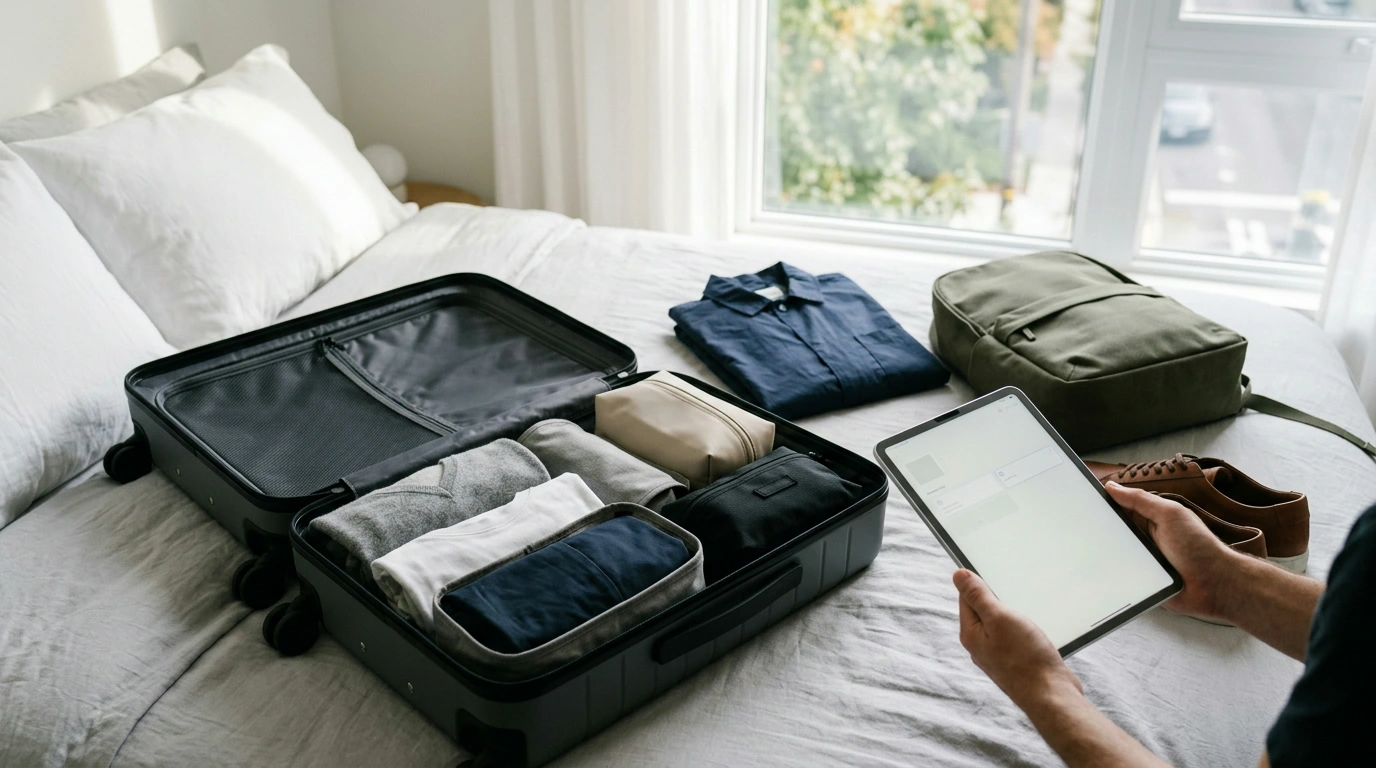
Minimalist Travel Packing Planner: Pack Light, Stay Organized, Travel Calm
Packing gets easier when decisions are made before the suitcase opens. A minimalist approach focuses on versatile essentials, clear limits, and a repeatable checklist that reduces overpacking and last-minute stress. Below is a simple packing system plus a quick digital workflow that works for weekend getaways, business trips, and longer vacations—without rebuilding your list from scratch every time.
What “minimalist packing” actually means
Minimalist packing isn’t about going without—it’s about choosing items that earn their space. Instead of bringing five “maybe” pieces, you bring a few reliable essentials that can cover more situations.
- Prioritize function over options: fewer items that do more (comfortable, wrinkle-resistant, easy to layer).
- Build a baseline list: start with the same core every trip, then adjust for weather, activities, and laundry access.
- Pack by outfits and uses: sleep, active, casual, and work/event needs—then count the minimum items required.
- Set a hard container limit: carry-on only, one backpack, or one personal item. The bag is the boundary that prevents “scope creep.”
The light-and-smart packing framework
When packing feels chaotic, it’s usually because decisions are being made in the wrong order. Start with constraints, then build outfits, then support those outfits with the minimum accessories and basics.
1) Start with constraints
- Trip length and whether you’ll do laundry
- Climate range (day vs. night, coastal wind, rain probability)
- Formality (meetings, dinners, events)
- Baggage rules (carry-on size, personal item limits, weight caps)
2) Pick a core palette
Choose two neutrals (like black + tan or navy + gray) and one accent color. Suddenly, most tops match most bottoms, and your “what goes with what” stress disappears.
3) Use the “1 in use, 1 spare” rule
4) Plan laundry on purpose
5) Keep an “always packed” kit
A small toiletry pouch and a charger kit that stay packed year-round eliminate the most common last-minute scramble. For carry-on liquids, confirm current rules before you decant: TSA’s liquids rule is the fastest reference.
Minimalist decisions that remove the most stress
| Decision | Simple rule | Result |
|---|---|---|
| Shoes | 2 pairs max (1 worn, 1 packed) | Less bulk and easier outfit planning |
| Bottoms | 2–3 max depending on formality | More space and fewer “just in case” items |
| Tops | One per day only if no laundry; otherwise 4–6 versatile pieces | Prevents overpacking while staying flexible |
| Outerwear | 1 primary layer plus packable rain protection when needed | Handles weather swings without duplicates |
| Tech | One charger setup + one backup cable | Fewer cords, fewer failures |
A repeatable digital planner workflow (15 minutes)
- Duplicate the base template and name it by destination + dates.
- Fill in trip variables: forecast range, key activities, dress codes, and transit days. For health-related destination considerations, check CDC Travelers’ Health.
- Generate outfits first, then list only the items required to support those outfits.
- Add non-negotiables: documents, medication, emergency contacts, reservations, and insurance details.
- Do a final “one less” pass: remove one optional item per category after the first draft.
If you want a ready-to-go template that already follows these rules, the Minimalist Travel Packing Planner (digital) is designed to be duplicated for each trip and refined over time.
What to pack for different trip types (without starting over)
- Weekend city break: one versatile jacket, one nicer outfit, and comfortable walking shoes. Keep tech light and focus on day-to-night flexibility.
- Beach or warm-weather: quick-dry items, a tighter footwear plan (sandals + one walking shoe), and minimal layers.
- Work trip: two work-ready outfits that rotate, ideally with one pair of shoes. If you’ll be on calls in a hotel or shared space, a compact option like the Professional Wired Condenser Conference Microphone can make audio clearer without adding much packing complexity.
- Multi-climate itinerary: prioritize layering (base + mid + shell) and avoid bulky single-purpose pieces.
- Family travel: separate pouches per person to reduce rummaging; keep a tiny “grab kit” for wipes, meds, and snacks during transit.
Space-saving without gimmicks
- Use packing cubes or pouches as categories: tops, bottoms, underwear, tech. Limits are easier to follow when each category has a home.
- Roll or fold consistently: the best method is the one that stays organized after day one.
- Keep liquids minimal and refillable: confirm carry-on limits before you decant. If you’re unsure about restricted items beyond liquids (like batteries), review passenger guidance from IATA.
- Wear your bulkiest items in transit: jacket, sneakers, heavier pants, and a hat if space is tight.
- Separate dirty and clean from day one: one bag, one cube, or a dedicated laundry pouch prevents “everything is suspicious” syndrome.
Common overpacking traps (and quick fixes)
Minimalist Travel Packing Planner (digital): who it’s for and how to use it
To streamline the time around travel days—calendar blocks, reminders, and routine checklists—the AI-Powered Days: Master Your Schedule with Smart Automation pairs well with a packing template so nothing important is left to memory.
A simple pre-departure check to prevent last-minute panic
FAQ
How many outfits are enough for a one-week trip?
With laundry access, 4–6 versatile tops, 2–3 bottoms, 1–2 nicer options, and a layering piece is usually enough. Without laundry, plan closer to one outfit per day but still reuse bottoms and outer layers when possible.
What’s the fastest way to stop overpacking?
Set your bag limit first, plan outfits before listing items, rely on a fixed toiletry/tech kit, and then remove one optional item per category after your first draft. That last “one less” pass prevents the typical creep of extras.
Do packing cubes help with minimalist travel?
Packing cubes don’t magically reduce volume, but they prevent mess, speed access, and make category limits easier to follow. For minimalist travel, 3–5 cubes or pouches is usually plenty.






Leave a comment